


stove repair specialists
Your stove,
cooking again.
We’ll fix it.
Repairs for the stove that feeds the household.
Say what a burner, a knob or the oven did. We’ll find the cause.
- Burners, igniters and knobs
- The oven part of the stove
- Gas, electric, induction, heritage
What to expect
Experienced technicians
More than 12 years in appliance repair
Upfront pricing
The cost of the repair in writing, before any work begins
OEM parts on order
Original manufacturer parts ordered against your model number, never third-party substitutes
Warranty on our workmanship
Every repair is backed by a warranty on the work we performed
Your next step
to a working stove.
A few details now.
A little less to worry about.
Tell us what it did
Pick the appliance and say what the burners, the knobs or the oven are up to.
Pick your day
Choose a date, then an arrival window that fits around work and school.
Give the address
Add the street address and a phone number, so the technician can ring before arriving.
The make and model are printed on a small plate on the stove itself: slide the storage drawer all the way out and look at the frame behind it, or open the oven door and check the edge of the opening. On some stoves the plate hides under the stovetop lid or behind a back panel. Those two lines tell us which stove we are coming to.
or call (844) 415-7620
Loading appointment form…
The appointment form couldn’t load. Please try again.
Four steps,
and no surprises.
The three steps in the form are how you book. These four are what actually happens once a technician is standing in your kitchen.
The stove, tried the way you use it
The technician turns every knob, lights or heats each burner, runs the oven up to a set temperature and reads any code on the display, all before calling out the part that failed.
A number before the work
You hear what the stove needs and what it will cost before a single part is fitted. If putting money into this stove makes less sense than a new one, you hear that too.
Common stove parts already on board
Igniters, spark switches, coil burners, sockets, bake elements and knobs travel in the van. A glass top, a control board or a part only one model uses is ordered by number, so sharing that number at booking can save a second trip.
Put back, then cooked on
With the new part in, each burner is lit or heated again and the oven is brought up to temperature while the technician watches the flame, the glow and the knobs, so the repair is proved in front of you.
Not every stove
breaks the same way.
A gas stove lights its burners and its oven with a spark, an electric stove heats coils or ribbons under a smooth glass top, an induction stove warms the pan itself through the glass, and a heritage stove such as an AGA or a La Cornue is built of cast iron and enamel to last generations. Pick out the one standing in your kitchen.
All stove types
Gas stove
A stove with gas burners on top, whether its oven below runs on gas too or on electricity, fed by one gas line behind it and plugged into a wall outlet for the spark.
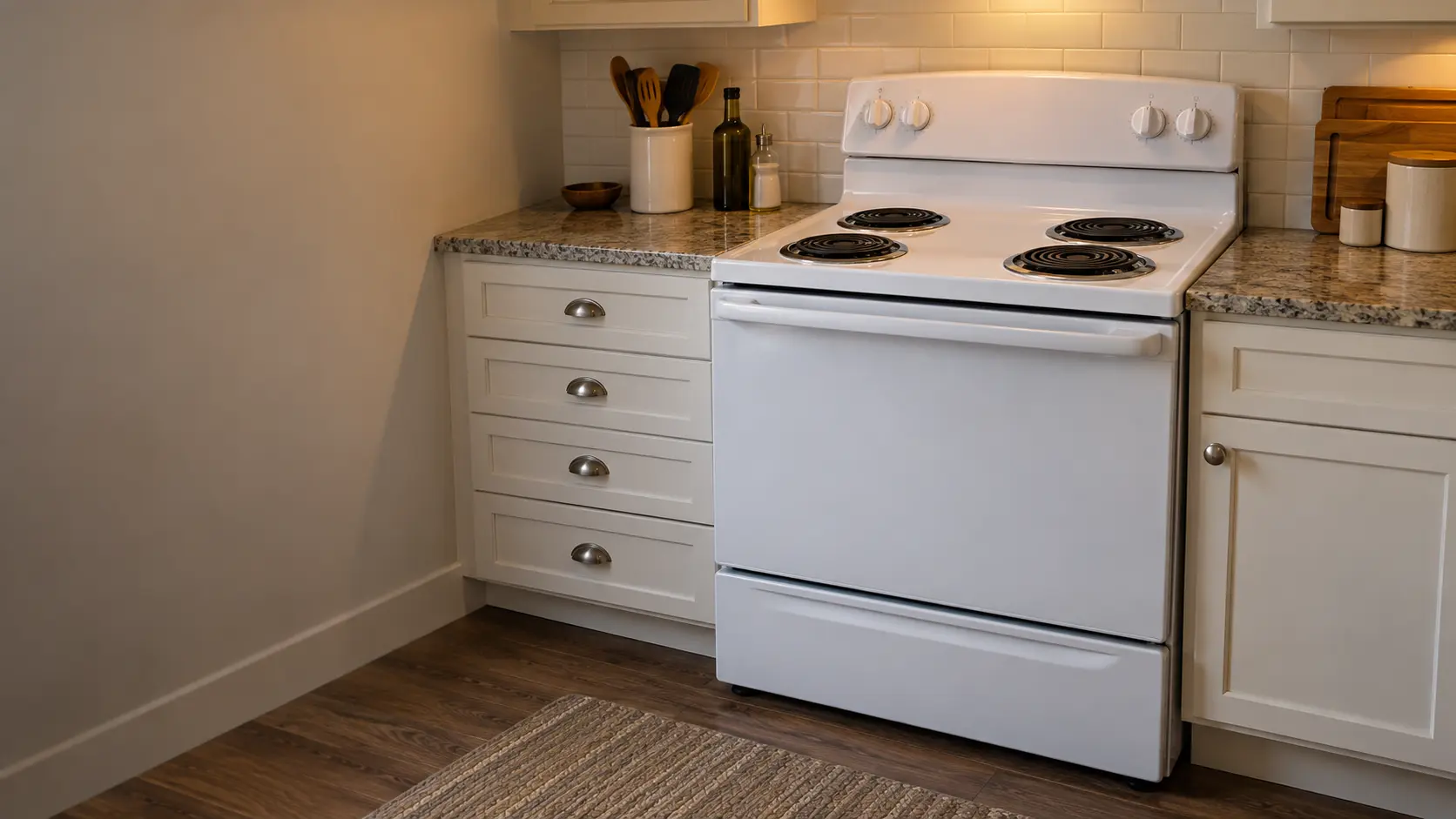
Electric stove
A stove that runs entirely on electricity through a heavy cord and a large outlet behind it, with coil burners that lift out or a smooth glass stovetop with elements under it.

Induction stove
A stove with a flat glass top that heats the pan itself through a magnetic field, run by touch keys and power boards, with an electric oven underneath.

Heritage stove
Classic stoves built the old way, from AGA cast-iron heat storage stoves to French and Italian enamel stoves with brass trim, kept for decades and repaired rather than replaced.
Every kind we serviceAll stoves, side by side
The archive puts the 4 types against each other: how to tell which you own, what fails on each, and which manufacturers build them.
How to tell yoursWhat fails on eachWho makes them Open the type archiveA knob that turns the burner on, and off again.
An oven that bakes what the recipe says.
Maybe the stove went dead after a storm, one burner is stuck on high, the stove keeps clicking long after the flame caught, or the oven part of the stove burns the bottom of every tray. Begin with what the stove did the last time somebody cooked on it; each page says what that usually means before it says a word about booking.
 All 17 problems
Stove Smells Like Gas
You walk into the kitchen and catch the rotten-egg smell of gas around the stove, at the knobs, low by the oven drawer or from the gap behind it, whether you are cooking or not.
Stove Sparking
A bright flash, a crackle or a shower of sparks comes from a coil burner, from under the glass, from the oven element or from behind the stove, sometimes with a pop and a burnt smell.
Stove Burner Stays on High
One burner heats at full power whatever the knob says, glows red when it should be off, or keeps a big flame that turning the knob does not bring down.
Stove Smoking
Smoke rises from a burner, pours out of the oven vent, drifts up from behind the stove or seeps from the control panel, with or without a pan on top.
Stove Shocks When Touched
You feel a tingle or a jolt when you touch the stove's door handle, the stovetop, a knob or a pan on a burner, sometimes only when you are also touching the sink or standing barefoot.
Stove Won't Turn On
Nothing happens anywhere on the stove: no burner heats, the oven stays cold, the clock and lights are dark, or the display lights up but nothing will start.
Familiar brands. Expert care.
For the brands
in your kitchen.
Independent repair service. Not affiliated with, authorized or endorsed by any manufacturer. Brand names and model numbers are the property of their respective owners and are used here for identification only, to describe the appliances we service.
What a repair
usually costs.
When weighing a stove repair, picture the whole bill for a new stove, not the price on the showroom tag: delivery, hauling the old one away, a new gas connector or cord, and a slide-in model that must match the gap and the counter edge you already have. Against that, igniters, coils, sockets, knobs, hinges and oven elements are nearly always worth replacing. A new stove tends to make sense only when a glass top and a control board fail together on an older stove, the board for your model is no longer made, or rust has come through the oven floor.
| Repair | Relative cost | Notes |
|---|---|---|
| Gas burner head, cap, orifice or valve | low to moderate | Cleaning, reseating and adjusting a burner often needs no part. A new head or cap is a small cost, while a burner valve sits higher because the stovetop is opened and every joint is leak-tested afterward. |
| Electrode, spark switch or spark module | low | An electrode or a single spark switch is a small part reached from the top of the stove. A spark module costs a little more and is reached from the back or under the stovetop. |
| Coil burner, socket or drip pan | lowest | Coils, sockets and drip pans are among the least costly parts on any stove. Renewing burned wire ends behind a socket adds a few minutes, not much more. |
| Glass stovetop, element or induction coil | moderate to highest | An element or limiter under the glass stays toward the middle of the scale. A whole new glass top, made for one model, is one of the costliest jobs a stove can need, and more so on an induction stove. |
| Oven element, igniter, gas valve or sensor | low to moderate | A bake or broil element and a temperature sensor are modest parts fitted from inside the oven. A gas oven igniter sits in the middle, and a gas safety valve comes out higher. |
| Knob, stem or burner switch | low | A knob on its own is minor. A switch behind a knob takes a short job with the power off, and scorched wire ends on it are renewed during the same visit. |
| Control board, keypad or display | moderate | A reseated connector or a cleared lock costs little. A keypad or a display board lands in the middle, and an induction power board pushes the job toward the top of the scale. |
| Oven door hinges, seal or lock | low | Hinges are replaced in pairs and a seal clips in, both from the front of the stove. A door lock on a self-cleaning stove, or door glass, adds a little more. |
| Gas connector, cord or anti-tip bracket | low | A new connector, cord or bracket is an inexpensive part. Most of the time goes into sliding the stove out safely, leak-testing each fitting and setting it back square. |
9 metros,
one appliance.
Where a stove lives changes how it gets old: a gas main or a propane tank out back, a rental where the stove came with the lease, an older house on a tired kitchen circuit, a coast where storms knock the power out. These notes are about stoves in each place, not about the place itself.
All service areasTampa BayFL · 31 areas
Tampa Bay kitchens lean electric, and many stoves there belong to winter residents, retirees and rental owners who are not always home when something fails. Summer lightning and hurricane season cut power and send surges into controls, storm surge has reached stoves in low coastal streets, and older houses still keep coil-burner stoves.
OrlandoFL · 30 areas
Around Orlando, a large share of homes are vacation houses and rentals, where a stove meets new cooks every week, so broken knobs, cracked glass and burners left on high are regular reports. Summer storms cut power in the afternoons, and many owners look after their stoves from far away through a property manager.
Miami / South FloridaFL · 47 areas
South Florida stoves are electric in most towers and gas or electric in houses, and the calendar shapes the calls: hurricane evacuations, outages that blank the displays, flooding that reaches stoves on low ground, and winter owners who find their stove after months away. Rentals and seasonal homes put each stove in the hands of many different cooks.
New York MetroNY · 75 areas
New York cooks on gas, and most apartment stoves belong to the landlord or came with the co-op, so a repair is arranged through the super and scheduled around the building. Stoves here outlive several tenants, small kitchens put the stove within reach of everyone passing, and any gas smell brings the utility, called from outside the apartment.
HoustonTX · 36 areas
Greater Houston cooks largely on gas, and when hurricanes or winter storms cut power for days, a gas stovetop lit by hand, where the maker allows it, is how many families eat. Floodwater reaches stoves in low neighborhoods, new owners and tenants arrive constantly, and older houses keep stoves long past their first owners.
ChicagoIL · 50 areas
Chicagoland mostly cooks on gas, and its stoves often outlast their owners' stay: two-flats hand a stove from tenant to tenant, bungalows keep one through decades of winters, and basement kitchens hold a second for holidays. Spring storms can flood the basements where those second stoves stand, and from October on every oven in the region is baking.
Los AngelesCA · 95 areas
Greater Los Angeles cooks on stoves of every age, from mid-century gas models in bungalows to heritage European stoves in remodeled estates. Earthquakes make the stove's bracket and its gas hookup part of every visit, rentals and moves keep stoves changing hands, and fire recovery is bringing new stoves into rebuilt kitchens.
San DiegoCA · 31 areas
Gentle weather is easy on San Diego stoves, but the region's big military community keeps households moving, so stoves are often disconnected, pulled out and reset between tenants. Close to the ocean, salt finds its way to knobs and igniters, and wildfire evacuations leave some houses closed with the stove shut off for days.
San Francisco Bay AreaCA · 74 areas
Across the Bay Area, older flats still cook on vintage enamel gas stoves their owners keep on purpose, while remodels move to induction under local all-electric rules. Rentals are many and change hands often, fire-weather power shutoffs leave electric stoves dark for a day or more, and near the water damp air reaches knobs and spark switches.

Answers before
you book.
How fast can someone come out to look at my stove?
Do you repair the make of stove I have?
What should I have on hand when the technician comes?
How much does it cost to fix a stove?
Is it better to fix my old stove or buy a new one?
My stove burner is stuck on high and the knob does nothing. How do I stop it?
Work out what
you are dealing with.
Split by what you are trying to find out rather than by what part of the appliance it concerns.
All 21 guides
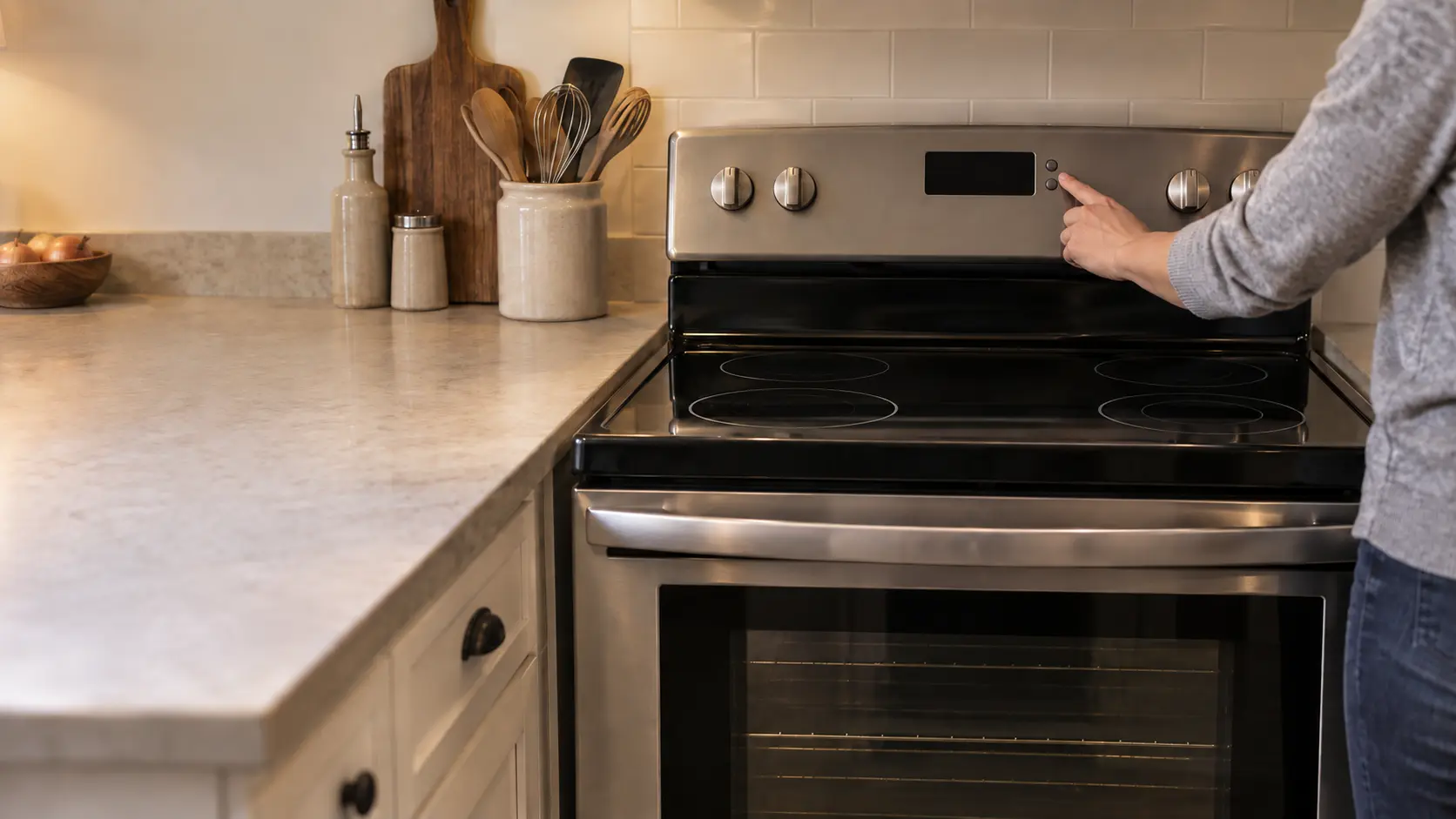


Want to know what a stove repair will run you? That gets a page of its own instead of a line here, because nobody can fairly name a number before the stove has been pulled from the wall and opened — stove repair cost.
Back to your everyday
Let’s get your stove working again.
Three short steps, a window that suits you, and a price for the actual repair before any work starts.