
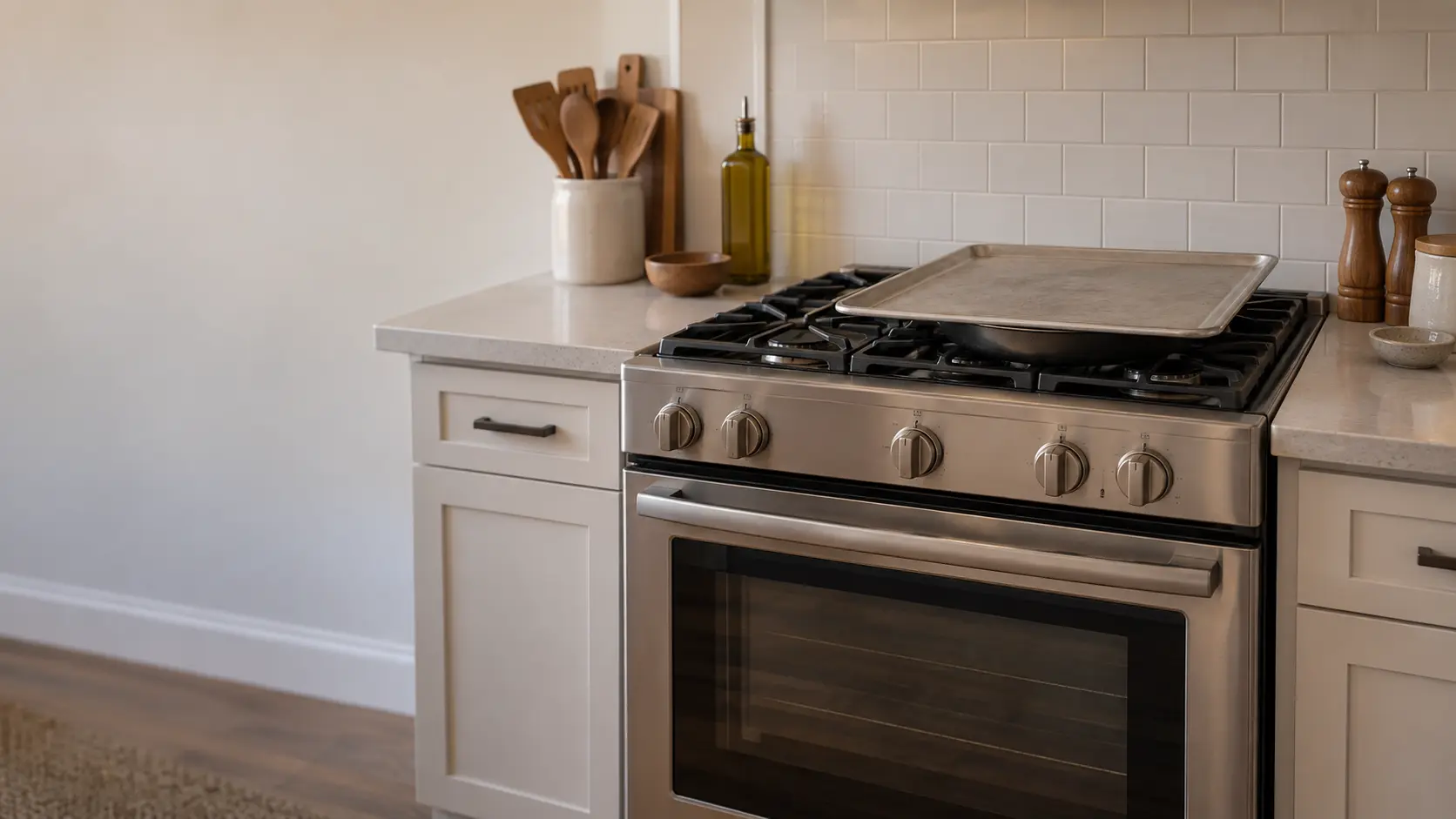

Keeping the household safe around the stove
Gas, fire and burn safety at the stove
guides.
Putting out a grease fire on the stovetop, keeping small children away from the knobs and the oven door, and knowing when a stove could be a carbon monoxide worry.
Mon–Sat, 8am–8pm
- Three guides
- Read before you book
- Says where to stop
Book a visit
Three short steps, about a minute.
or call (844) 415-7620
Loading appointment form…
The appointment form couldn’t load. Please try again.
Gas, fire and burn safety at the stove,
guide by guide.
This section is about the moments at the stove when the question is not what is wrong with it but whether anyone could get hurt. A pan of oil that has caught, a toddler reaching for a knob or an open oven door, and a carbon monoxide alarm going off on a winter night each have a short, known first move, and it is worth learning that move before the evening it is needed.
All 18 guides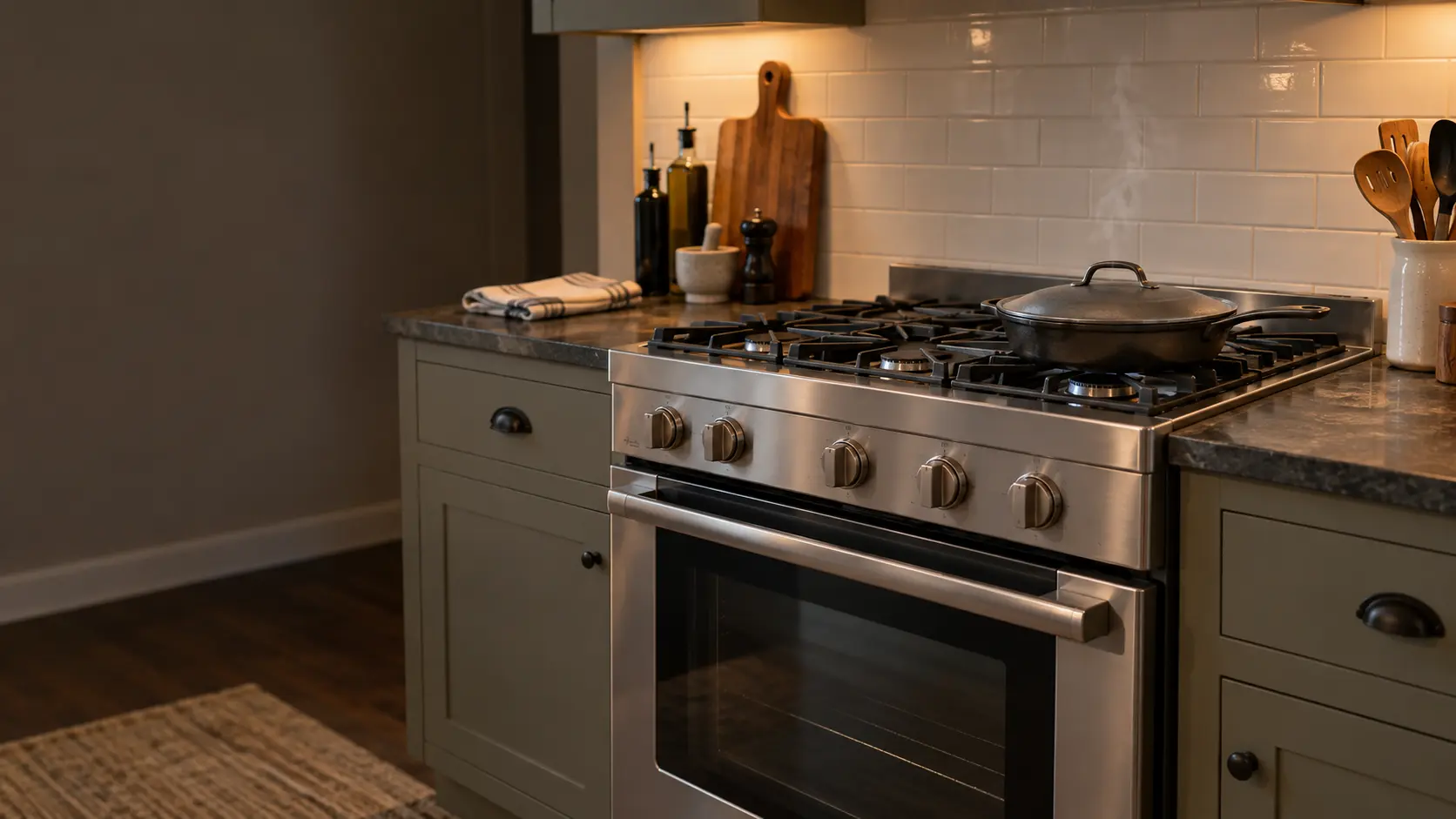


Keeping the household safe around the stove.
The three guides deliberately keep the appliance for last. Putting out a pan fire comes down to a lid and a knob, not a phone call to us; keeping small children safe is mostly a matter of how the kitchen is arranged; and a carbon monoxide alarm sends everyone outside before anybody looks at a burner. Where a figure appears, such as the three-foot clear zone or the list of poisoning symptoms, it comes from NFPA, the U.S. Fire Administration, CPSC, CDC, Ready.gov or the stove maker's own manual, and the source is printed beside the part of the guide it supports.
Read them when you move into a home with a stove you did not choose, when a baby starts to crawl, or before the first cold snap of the year. Each guide ends by saying where your part stops and the fire department, the gas utility or a technician takes over.
Not sure where to start?The short answerPutting Out a Grease Fire on the Stove: Lid On, Heat Off, No Water
A grease fire on the stove is put out by sliding a well-fitting lid, a cookie sheet or a flat tray over the pan, turning the heat off and leaving the cover on until the pan is cold.
The short answerSmall Children and the Stove: Handles, Knobs and the Oven Door
Stove safety with small children rests on four habits and one check: a clear zone of at least three feet around the stove while cooking, pot handles turned inward over the back of the stovetop, nothing tempting stored above the stove, the control lock or knob covers in use, and an anti-tip bracket that actually holds the stove when someone steps on the open oven door.
The short answerCarbon Monoxide and Your Stove: When to Worry and What to Do
Stove carbon monoxide is a real concern when a gas stove or oven is used to heat the home, runs for hours with its air blocked by foil or grill plates, or burns yellow and leaves soot on pans.
When reading
is not enough.
If the checks in these guides did not settle it, the visit picks up from there, stop by stop.
What repairs cost- 01The stove, tried the way you use it
- 02A number before the work
- 03Common stove parts already on board
- 04Put back, then cooked on
The problems
these answer.
Each has a page of its own, with the causes in the order worth checking.
All 17 problems


Questions about
gas, fire and burn safety at the stove.
Oil in my skillet just caught fire. What do I do first?
Why does a stove with an electric top still appear in a guide about carbon monoxide?
What is the single most useful safety check on a stove in a home with children?
The other
sections.
Split by what you are trying to find out rather than by which part of the appliance it concerns.
All guides


Back to your everyday
Let’s get your stove working again.
Three short steps online, or one call. Tell us what you are seeing and pick a window that works.