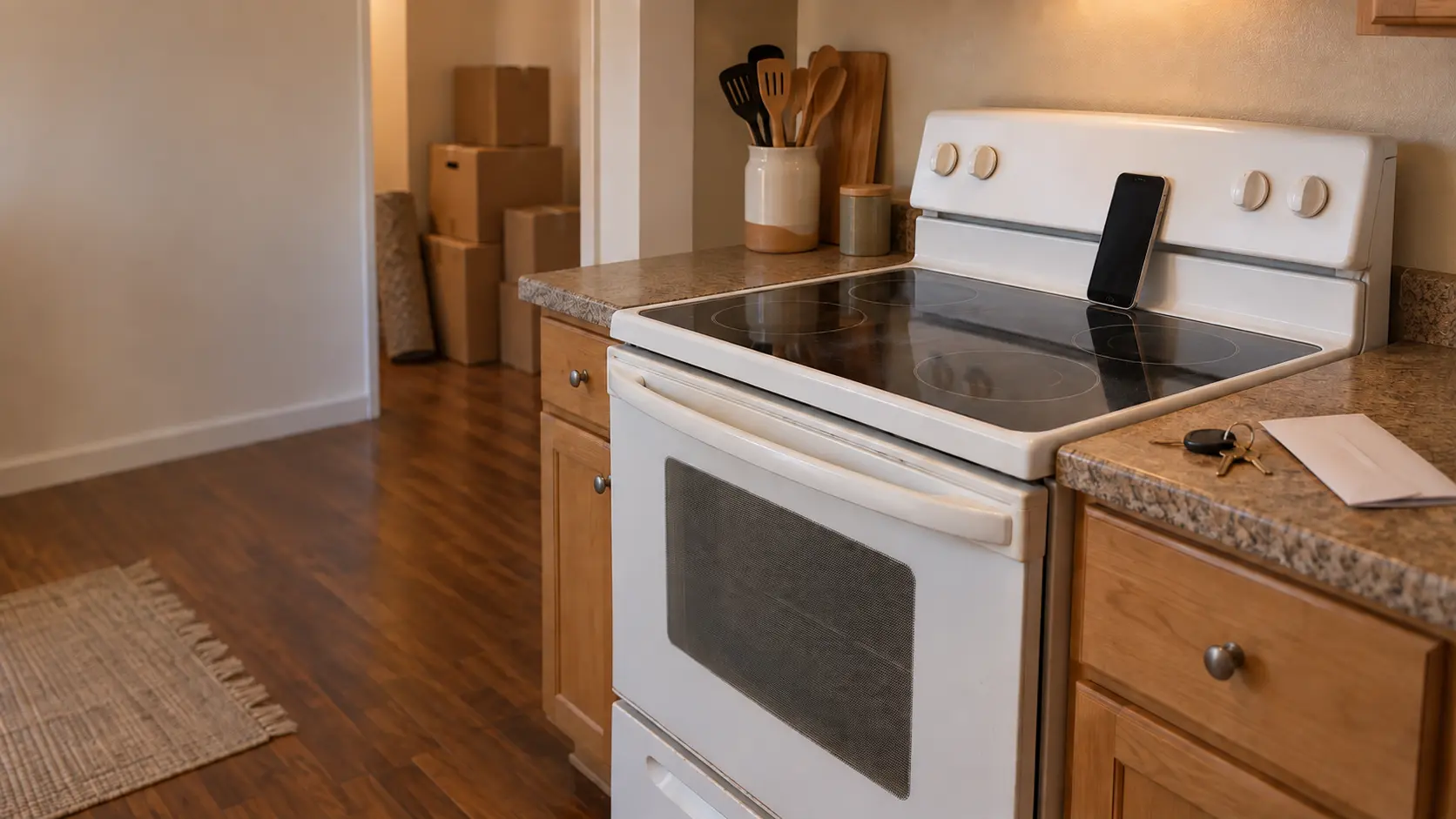


Whose stove it is decides who fixes it
In most rentals the stove came with the apartment, and that makes it the landlord's appliance. New York's attorney general, for example, says landlords must keep appliances they installed, naming refrigerators and stoves, in good and safe working order, with repairs made within a reasonable time. Other states have their own rules, and many put similar duties under the warranty of habitability, so your state attorney general's tenant guide is the place to confirm.
The lease matters too. Some leases for single-family homes shift minor upkeep to the tenant, and a stove the tenant brought in is the tenant's to repair. When the lease is silent, treat the stove as the landlord's and ask before arranging any repair yourself.
None of this makes a stove in a rental less important to look after. The tenant is the one cooking on it every day, and a problem reported in the first week is almost always cheaper and faster to fix than one discovered at move-out.
Source: New York State Attorney General — Residential Tenants' Rights Guide — Landlords must keep appliances they installed, such as refrigerators and stoves, in good and safe working order with repairs in a reasonable time; tenants should keep copies of repair communications; repair-and-deduct applies in extenuating circumstances; the deposit may cover repairs beyond normal wear and tear
A move-in check that takes ten minutes
The day you get the keys, before you unpack the pans, go over the stove and write down what you find. Photograph anything that is already chipped, cracked or dirty, with the date visible or recorded, and send the list to the landlord so it is on file.
- Light every gas burner or switch on every element and confirm each one heats and switches off.
- Run the oven to a normal baking heat and check it warms up and the light and fan work.
- Look for cracks or chips in a glass top, missing grates or caps, and cracked or missing knobs.
- Open and close the oven door and the drawer, and note any door that does not close fully.
- Ask whether the stove is secured with an anti-tip bracket, and where the gas shutoff or breaker for it is.

The care that falls to the tenant
Even when every repair is the landlord's, the everyday condition of the stove is yours, and it is the part that decides what happens to the deposit.
Keeping it clean
Wipe spills when the stove cools, wash grates, caps or drip bowls every week or two, and keep the oven floor clear of burned-on drips. A stove handed back greasy looks like neglect even when it works perfectly.
Using it as intended
Do not heat the apartment with the oven, stand on the open door or use a glass top as a counter for heavy pots. Damage caused by misuse, like a cracked top from a dropped cast-iron pan, is the kind of repair a landlord can charge back.
Knowing what not to touch
Leave the gas connection, the power cord, the wiring and anything behind a panel alone, even if a video makes it look simple. A tenant who swaps a part on the landlord's stove can end up responsible for whatever goes wrong next.
Asking for a repair so it actually happens
Report a problem as soon as you notice it, while it is still one burner and not the whole stove. Put the request in writing, by email, text or the landlord's portal, describe what the stove does rather than guessing at the part, and include the brand and model from the tag if you can find it. Keep copies of every message, as the New York guide advises for any repair dispute.
Offer times when someone can be home for the visit and follow up in writing if nothing happens within a reasonable time. Paying for a repair yourself and deducting it from rent is allowed only in some states and circumstances, so check your state's tenant guide before trying it.
- What the stove does: which burner, element or oven, and what happens when you try it.
- When it started, and whether anything preceded it, such as a spill, a power outage or a move.
- Brand, model and serial from the tag, or a clear photo of the tag.
- Whether you have stopped using the whole stove or only one part of it.
Source: New York State Attorney General — Residential Tenants' Rights Guide — Landlords must keep appliances they installed, such as refrigerators and stoves, in good and safe working order with repairs in a reasonable time; tenants should keep copies of repair communications; repair-and-deduct applies in extenuating circumstances; the deposit may cover repairs beyond normal wear and tear
Moving out without losing deposit money over the stove
A landlord may use the security deposit for the reasonable cost of repairing damage beyond normal wear and tear. Faded knob markings and a slightly scratched top after years of cooking are ordinary wear; a shattered glass top or a door hinge bent by someone standing on it is not.
Clean the stove thoroughly in the last week: grates, caps or bowls, the top, the knobs, the inside of the oven and the storage drawer. Take dated photos when you finish, next to the photos from move-in, and you have the whole story of the stove on your phone.
Source: New York State Attorney General — Residential Tenants' Rights Guide — Landlords must keep appliances they installed, such as refrigerators and stoves, in good and safe working order with repairs in a reasonable time; tenants should keep copies of repair communications; repair-and-deduct applies in extenuating circumstances; the deposit may cover repairs beyond normal wear and tear


