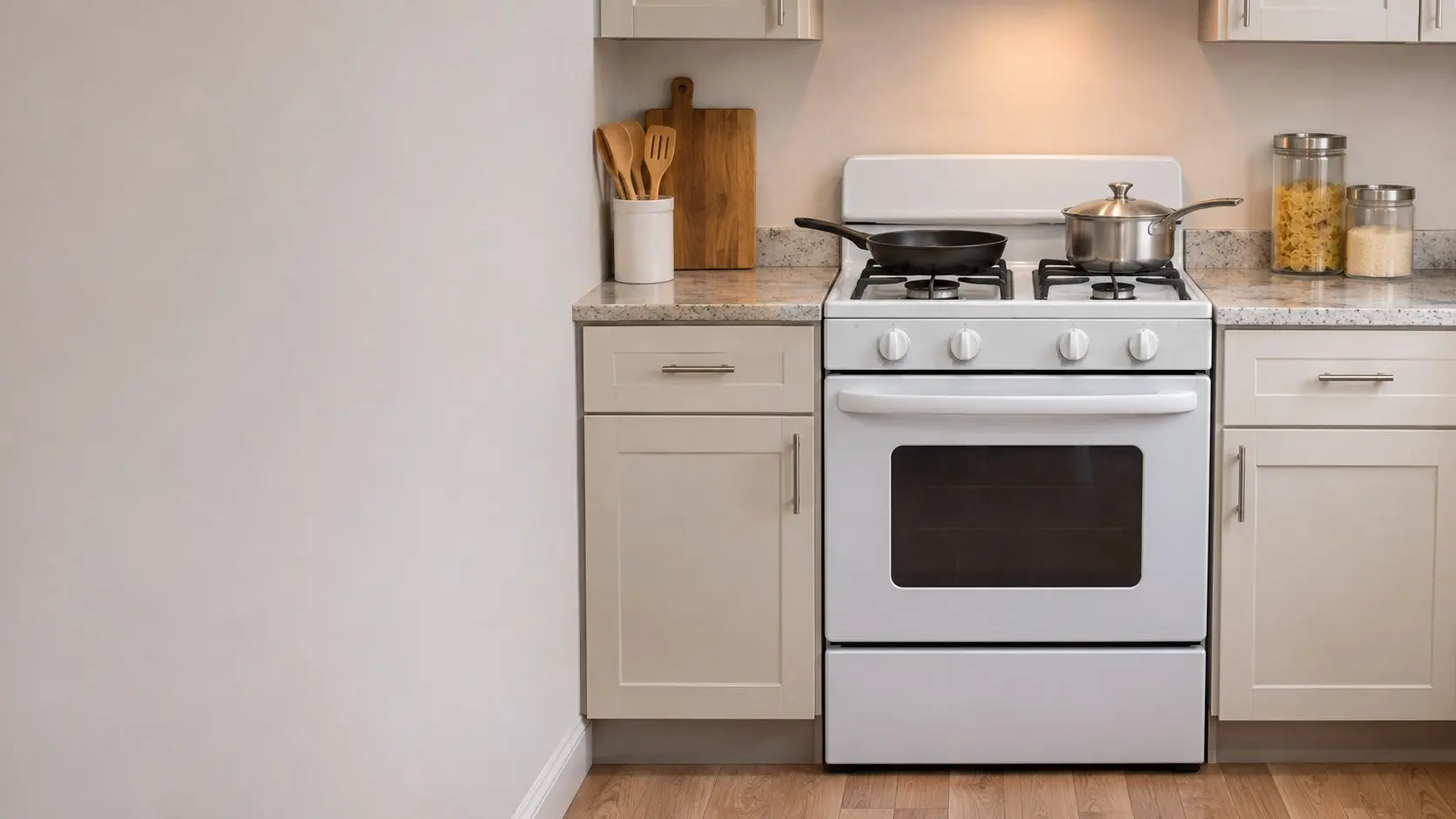


What sizes count as apartment size?
Apartment size means narrower than the 30 inch standard, most often 24 inches and sometimes 20. The width is the one number that defines the class, and it is measured across the front of the stove.
24 inch models
A 24 inch stove usually keeps four burners, a full-height cavity and a storage or broiler drawer. It is the common choice for galley kitchens and condos, and it is sold in both gas and electric versions.
20 inch models
A 20 inch stove is a tighter fit still, with fewer or smaller burners and a cavity that suits a small family at most. Models at this width are less common, so choices of finish and controls are fewer, and you should confirm that the one you pick is built for your supply.
Depth and height matter too
Measure depth and height as well as width. Counter height is the standard, but the depth into the room varies, and a handle or knob that projects can block a narrow aisle. Measure the opening in three places, since cabinets are not always square.
What do you give up on the burners?
You give up spacing: burners sit closer, so two large pans rarely fit side by side.
- A large skillet on a front burner can overhang the back burner's grate.
- Some small stoves have one big burner and three small ones, so the layout fixes which pot goes where.
- Grates are shorter, and a big stockpot sits closer to the knobs.
- Handles that point sideways run into a wall or a neighboring pan.
A quick pan test
Before buying, take the pans you use most and lay them on the floor in the shape of the burners, using the spec sheet's spacing. If two pans overlap, plan on cooking one thing at a time, or choose a model whose burners sit in a diamond rather than a square. Pot size is the burners' real limit.
How much cavity do you lose?
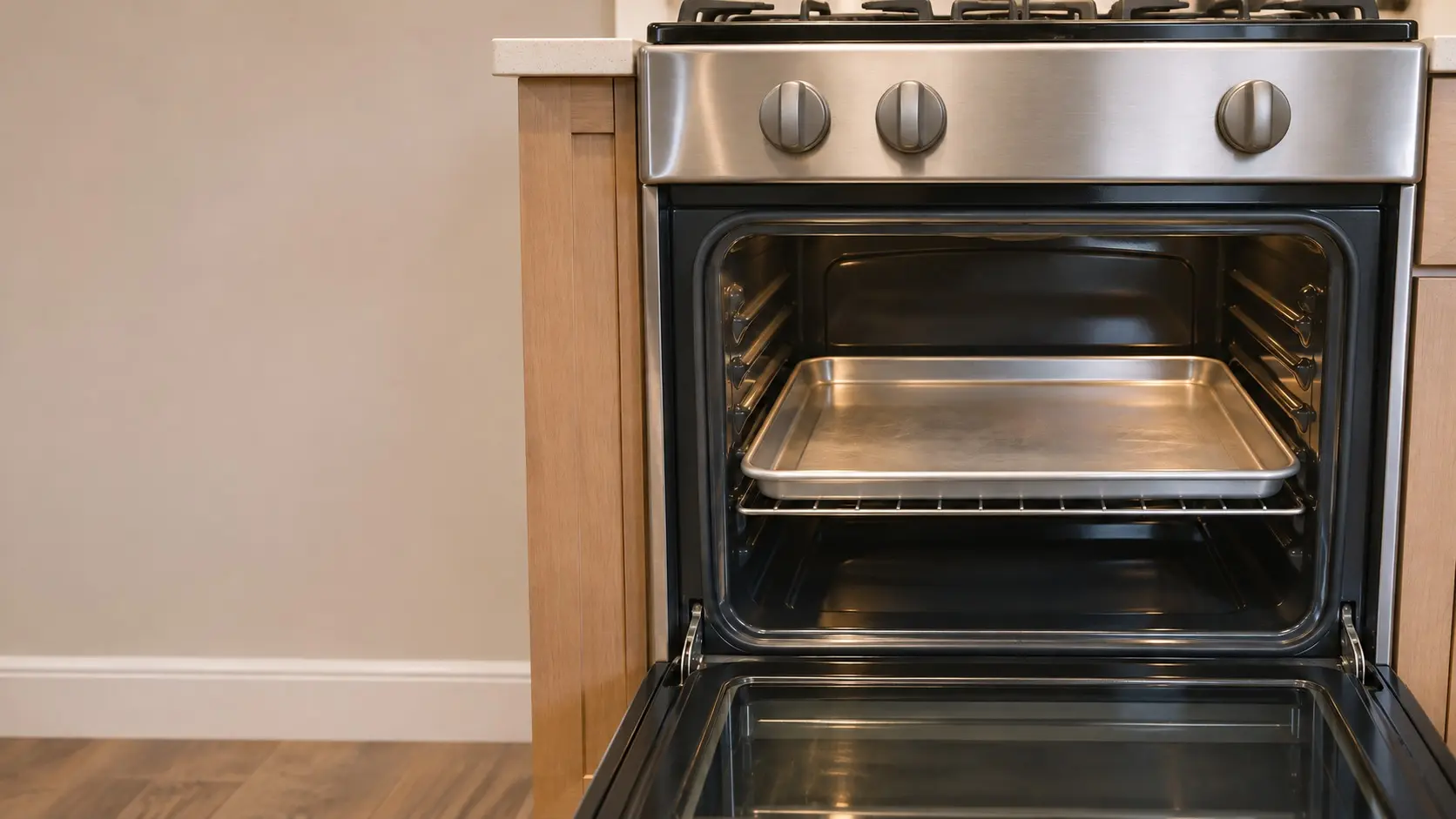
The cavity is narrower and often shallower, so full baking sheets and big roasting pans may not go in flat.
A half-size sheet pan, the standard bakery size, is about 18 by 13 inches, and whether it fits depends on the cavity's inside width, which the spec sheet gives separately from the stove's outside width. Many compact models list a smaller capacity in cubic feet, and a pan that touches the walls blocks airflow and cooks unevenly. Measure before you rely on a favorite tray.
| What you cook | Usually fine | Check before buying |
|---|---|---|
| Weeknight dinners for one or two | Yes | Pan height under the broiler |
| A holiday turkey | Often not | Inside width, depth and rack height |
| Two-rack baking | Sometimes | Rack spacing, tray width |
| Frozen pizza and sheet-pan meals | Usually | Whether the sheet fits flat |
Gas or electric: what must the wall provide?
The stove has to match what the wall delivers: a gas line with a shutoff valve for gas, or a dedicated outlet of the type named on the nameplate for electric.
Gas
A gas stove connects through a flexible appliance connector to a shutoff valve. A gas line is installed or moved by a qualified gas installer, and your gas utility is the one to call about a smell. If you are weighing fuels for a small kitchen, our guide to gas or electric for a remodel goes through the trade-offs.
Electric
An electric stove runs on a dedicated high-capacity circuit with a matching outlet and a cord, and cord and outlet types differ by age of the home. What the stove cord and outlet should look like shows the parts to compare. Some compact electric models draw less than a full-size one, but read the nameplate rather than assume, and have an electrician confirm the circuit.
The gas and power hookup check is the service that looks at the supply side before a stove goes in.
Is a small stove worth it, or should you resize the gap?
A compact stove is worth it when the gap is fixed and your cooking is for one to three people; resizing the gap is worth a look when you bake or host.
If the stove is old and you are replacing it, run it past fix the old stove or buy new first, since a repair keeps the fit you already have. If you rent, check the lease and read stove care in a rental before swapping. When you move the old one out and the new one in, moving a stove without damage covers the pull-out without a torn connector.
What to measure on the day
Write down four things:
- the opening's width, depth and height
- the distance from the wall to the valve or outlet
- the clearance to the nearest cabinet or wall
- the swing of the door of the cavity against the opposite counter
A small kitchen has less room for error. For a used stove that burns unevenly or keeps tripping, a diagnostic visit is the cheaper way to learn whether it is worth keeping.


