
Start with what the kitchen already has
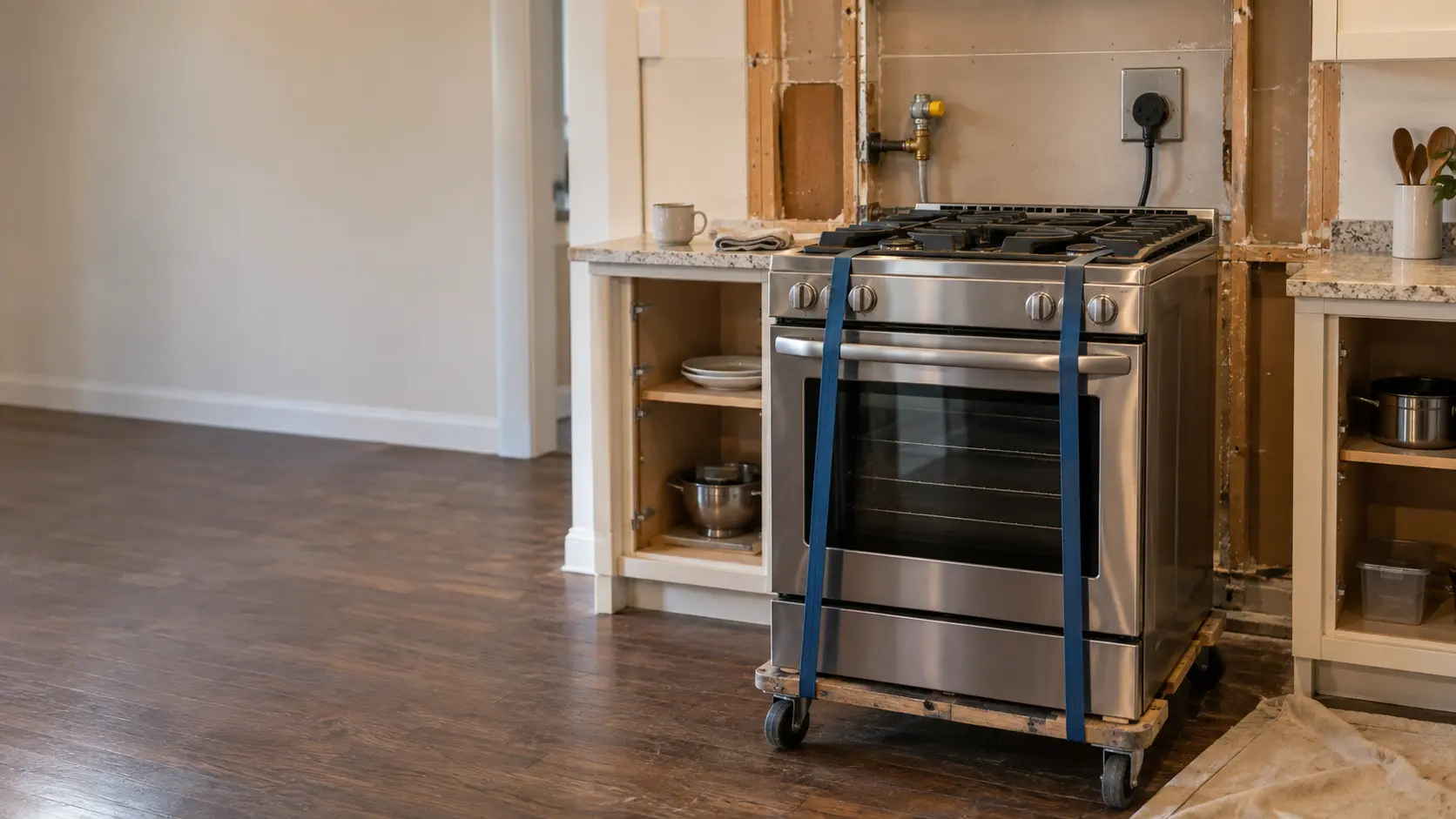
Open the wall or pull the old stove forward (with the gas shut off by an installer, or the breaker off) and note what is there. The supply you already have is the cheapest one to keep, and the stove you choose should be judged partly by how much of the house it asks you to change.
A gas stub and an ordinary outlet
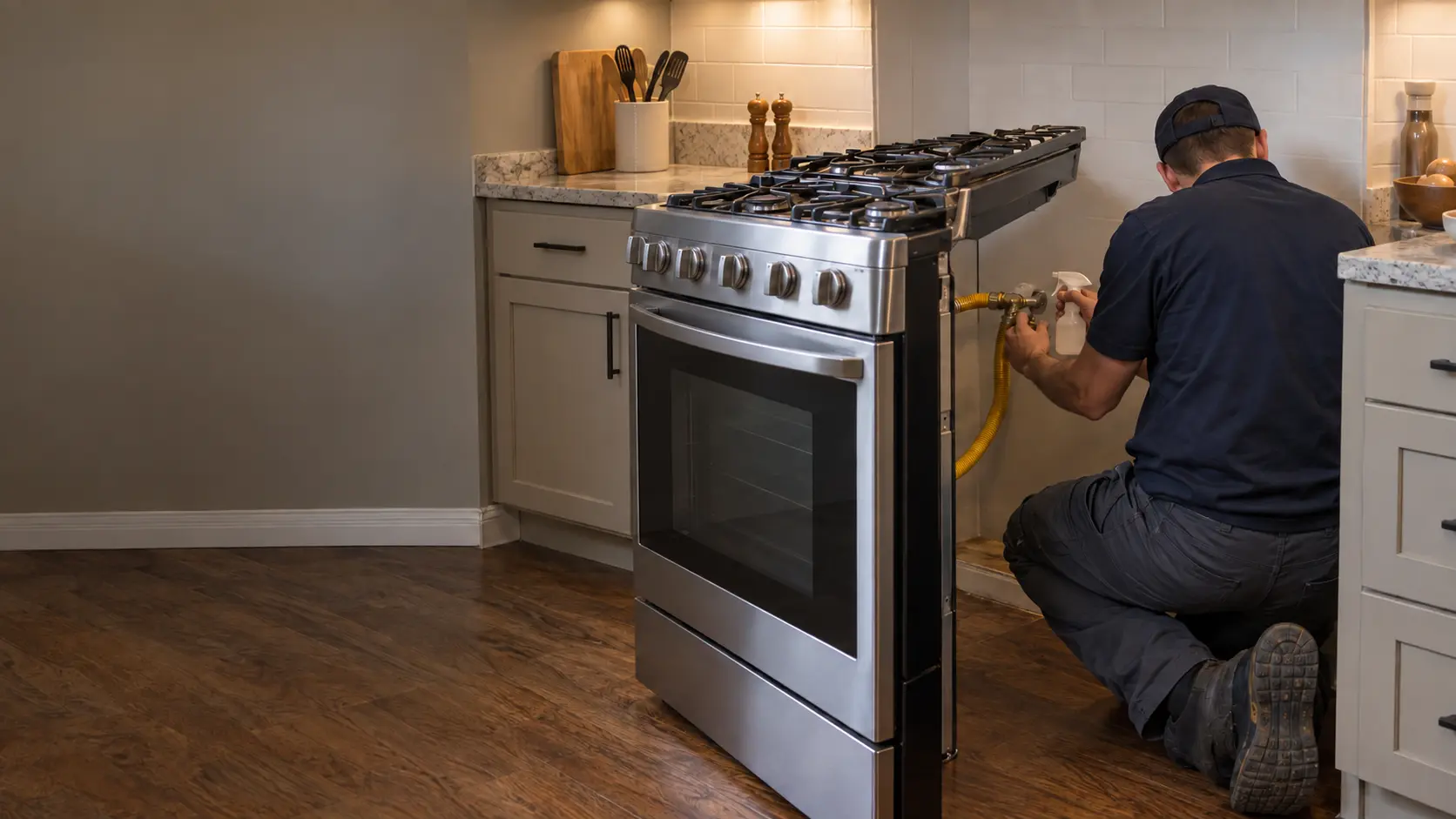
This kitchen is ready for a gas stove as it stands. Staying with gas means only confirming that the shutoff valve is reachable behind the new stove and that the outlet sits where the new model's cord will reach it without stretching.
A heavy 240-volt receptacle
A large round or rectangular receptacle low on the wall means the kitchen was wired for electric cooking. An induction stove may still need a larger breaker than the smooth-top it replaces, so read its rating plate requirement before assuming the circuit will do.
Both supplies, or neither
Some kitchens have both, left over from an earlier swap, which keeps every option open. A kitchen moving the stove to a new wall or an island has neither in the new spot, and then the difference in cost between the fuels comes down to the length of the run from the meter or from the panel.
The electrical panel can decide it for you
An electric or induction stove is one of the heaviest loads in a house. In an older home already running central air, an electric water heater and a dryer, the panel may not have the spare capacity or the space for another large breaker. An electrician can calculate the load before anything is bought; a panel upgrade can turn a simple swap into the biggest line on the remodel budget.
The federal Home Energy Rebates programs include HEEHR, which states run and which covers efficient electric appliances as well as electric wiring and load service center upgrades. Availability and eligibility differ by state, so ask your state energy office early, while the plan can still change.
Source: U.S. Department of Energy — Home Energy Rebates Programs — HEEHR rebates cover efficient electric appliances, electric wiring and load service center upgrades

Living with each one day to day
The table compares what owners notice after a few months, not what the brochure lists. Coil and smooth glass stoves are both electric resistance; induction heats the pan itself through a magnetic field.
- A gas stove adds combustion to the kitchen air, which is why the exhaust plan belongs in the same conversation.
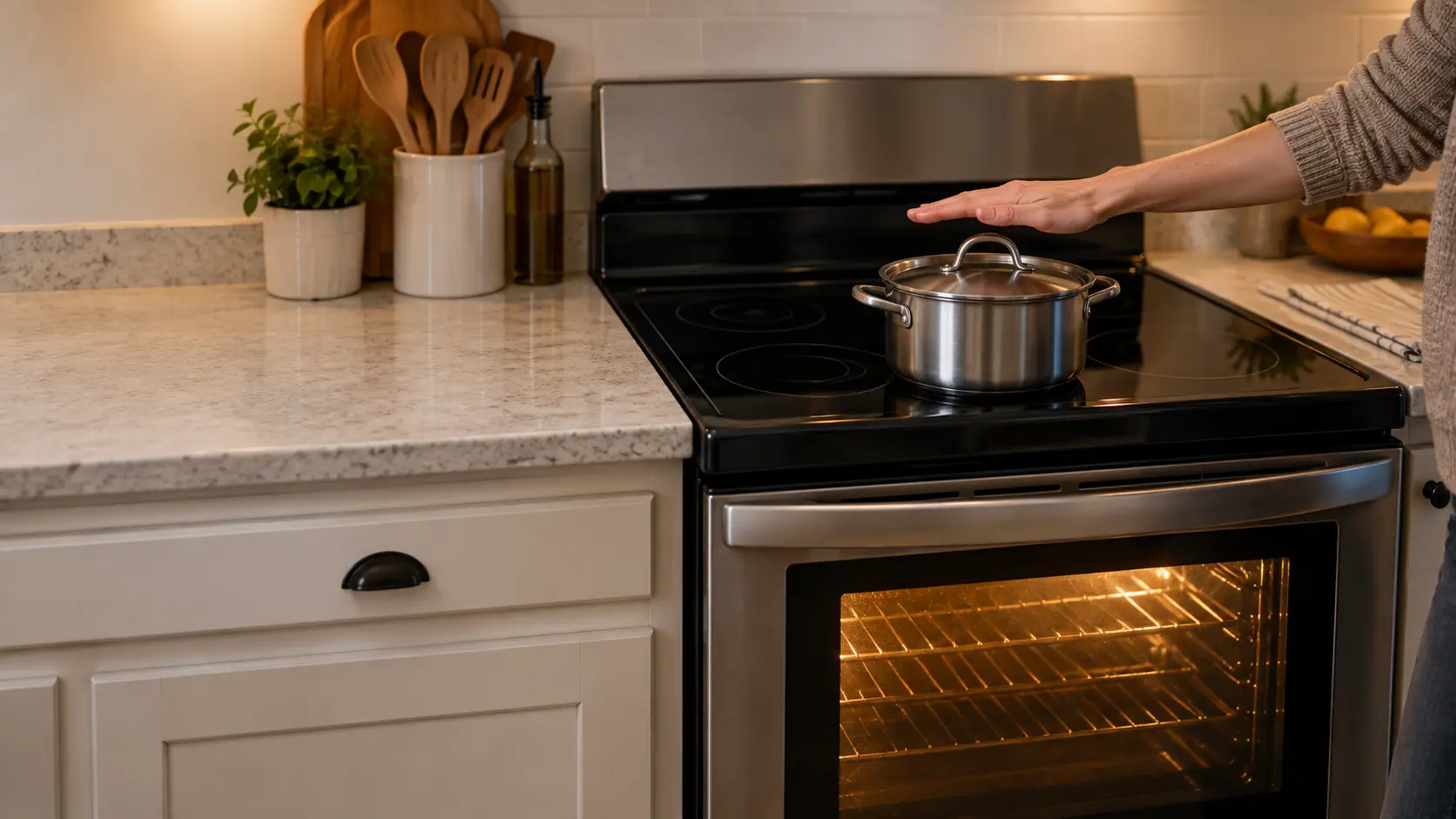
- An electric stove adds no combustion, but a smooth glass top stays hot for a while after the element is off.
- An induction stove keeps the glass cooler around the pan, which suits a household with small children.
| What you notice | Gas | Coil electric | Smooth glass electric | Induction |
|---|---|---|---|---|
| Response when you turn the knob down | Immediate | Slow | Slow | Immediate |
| Cleaning the top | Grates and caps to lift | Drip bowls to wash | One flat surface | One flat surface, spills burn less |
| Pans that work | Any | Any flat pan | Flat-bottomed pans | Magnetic, flat-bottomed pans |
| What most often needs repair | Igniters and spark switches | Elements and sockets | Elements, limiters and glass | Boards and cooling fans |
Source: U.S. EPA — Nitrogen Dioxide's Impact on Indoor Air Quality — Gas stoves are an indoor source of nitrogen dioxide; EPA advises installing and using an exhaust fan vented to outdoors over gas stoves
Plan the exhaust together with the fuel
The EPA lists gas stoves among the indoor sources of nitrogen dioxide and advises installing and using an exhaust fan vented to the outdoors over them. In a remodel that is the moment to run a duct through an outside wall or the roof, instead of settling for a fan that only recirculates through a filter.
Electric and induction stoves still produce steam, smoke and grease from the food itself, so the exhaust matters for them too; it simply stops being tied to the fuel. Size the fan and the duct for the way you cook, not for the stove's badge.
- Duct the fan to the outdoors through a wall or the roof rather than recirculating.
- Choose a fan wide enough to cover the front burners, which most cooks use most.
- Plan a switch within reach of the stove, so the fan actually gets turned on.
- Leave room for makeup air if the house is tightly sealed and the fan is large.
Source: U.S. EPA — Nitrogen Dioxide's Impact on Indoor Air Quality — Gas stoves are an indoor source of nitrogen dioxide; EPA advises installing and using an exhaust fan vented to outdoors over gas stoves
Pans, habits and everyone else who cooks
Induction is the choice most likely to change the cupboard. Whirlpool's help page gives the simplest test: if a magnet sticks firmly to the bottom of a pan, the pan will work on induction. Cast iron and most enameled steel pass; aluminum, copper and glass do not, unless they have a magnetic base.
Think too about who else uses the stove. A cook who chars peppers over a flame or uses a round-bottomed wok will miss gas. A household that wants the easiest top to clean, or a family member who forgets a burner, may be better served by electric or induction with its automatic shutoff features.
Source: Whirlpool — Induction compatible cookware: how to tell — A magnet that sticks firmly to the bottom of a pan shows the pan is induction compatible