


Stove
Smoking
Smoke rises from a burner, pours out of the oven vent, drifts up from behind the stove or seeps from the control panel, with or without a pan on top.
Mon–Sat, 8am–8pm
- Gas, fire, sparks or a burner stuck on
- 5 questions that narrow it
- 6 causes, cheapest first
Book a visit
Three short steps, about a minute.
or call (844) 415-7620
Loading appointment form…
The appointment form couldn’t load. Please try again.
If there is gas in the air, walk out first. Without gas, shut the stove's breaker off
Smoke from burning food clears once the spill is cleaned, but a fire in a pan needs a lid and the heat off, never water. Smoke with an electrical smell or from inside the stove is an emergency: breaker off if the panel is away from the stove, otherwise leave and call 911. Keep the stove off until it has been checked.
What it
usually means.
Most stove smoke is food: a spill charring on a drip pan, grease on the oven floor, or the protective oils burning off a new stove during its first few uses. That smoke smells like burnt cooking and stops once the residue is gone. A pan of oil that catches fire is a different matter and needs a lid, not water. Smoke with a sharp, plastic or electrical smell, or smoke coming from the back of the stove, from under the stovetop or from around the knobs and display, means something electrical is overheating, often a burnt connection or a failing part. That kind of smoke does not clear by itself and can turn into a fire inside the stove.
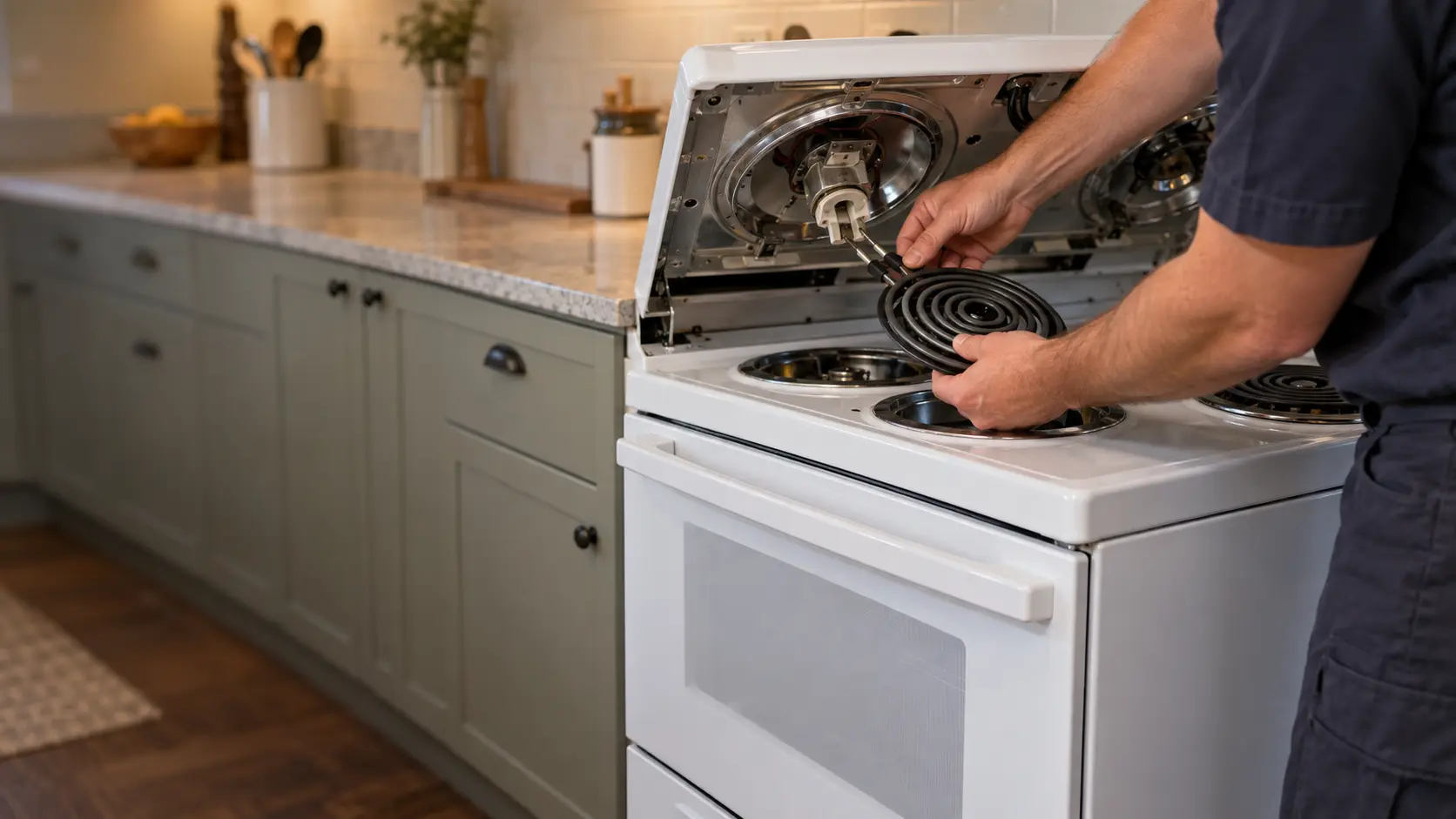 The 6 causes, cheapest first
Answer these first
Where is the smoke coming from: a pan, a burner, the oven vent, the back of the stove or the control panel?
Does it smell like burnt food, or sharp like hot plastic and wiring?
Is the stove new, or was the oven just cleaned or run on self-clean?
Did the smoke start right after a boil-over or a spill in the oven?
Is there a flame anywhere, and is it in a pan, in the oven or somewhere you cannot see?
Check these
before you book.
Stove smoking: 5 checks, and none of them costs anything.
If a pan is on fire, slide a lid or a baking sheet over it and turn that burner off; never throw water on it and never carry the pan outside.
If the smoke comes from the back, the knobs or the display, switch off the stove's breaker if the panel is away from the stove; if you cannot reach it safely, get everyone out and call 911.
If flames are inside the oven, turn it off and keep the door closed; if any fire has not died down within a minute or is spreading, leave the house and call 911.
Also worth checking
- Once everything is cold, look for spilled food on the drip pans, under the burners and on the oven floor.
- When you book, say where the smoke came from, what it smelled like and whether the stove still works.
The causes,
cheapest first.
6 things stove smoking turns out to be, from grease or oil burning in a pan to control board or switch overheating.
The cost guide-
01 no repair
Grease or oil burning in a pan
Oil heated past its smoke point smokes heavily and can catch fire. Slide a lid or a baking sheet over the pan, turn the burner off and leave the pan where it is until it has cooled; water makes burning oil explode outward.
-
02 no repair
Spills burning off drip pans or the oven floor
Food that ran under a burner or dripped onto the oven floor smokes every time that part gets hot. Clean it off once the stove is cold and the smoke stops.
-
03 no repair
A new stove burning in
New elements and oven liners are coated with oils that smoke and smell during the first few uses. Running the oven empty with the kitchen ventilated for the time your manual suggests clears it.
-
04 low to moderate
Oven element overheating before it fails
An oven element can smoke from a blistered or bulging spot shortly before it breaks. You may see a bright patch along it while the rest glows evenly.
-
05 moderate
Burnt power connection behind the stove
A loose screw where the cord meets the stove heats until the terminal block and insulation smoke. The smell is strongest at the back, and a burner or the oven may work only partly.
-
06 moderate to highest
Control board or switch overheating
Smoke seeping from around the knobs or the display comes from the switches or the board behind them, sometimes after steam or a spill has worked its way inside.
What else
it could be.
Most often confused with stove sparking, then stove burner stays on high.
All problems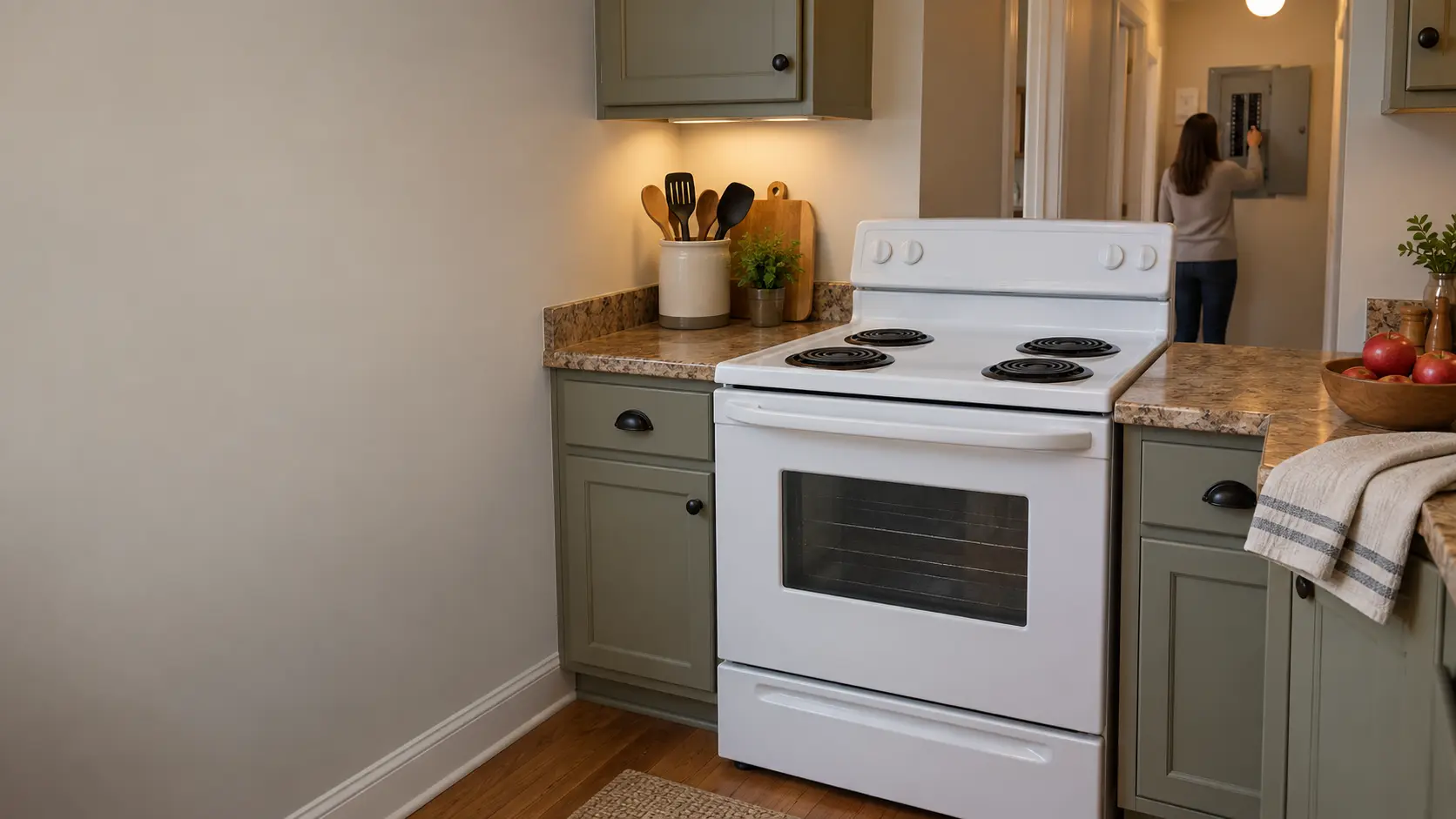

The makes
it happens on.
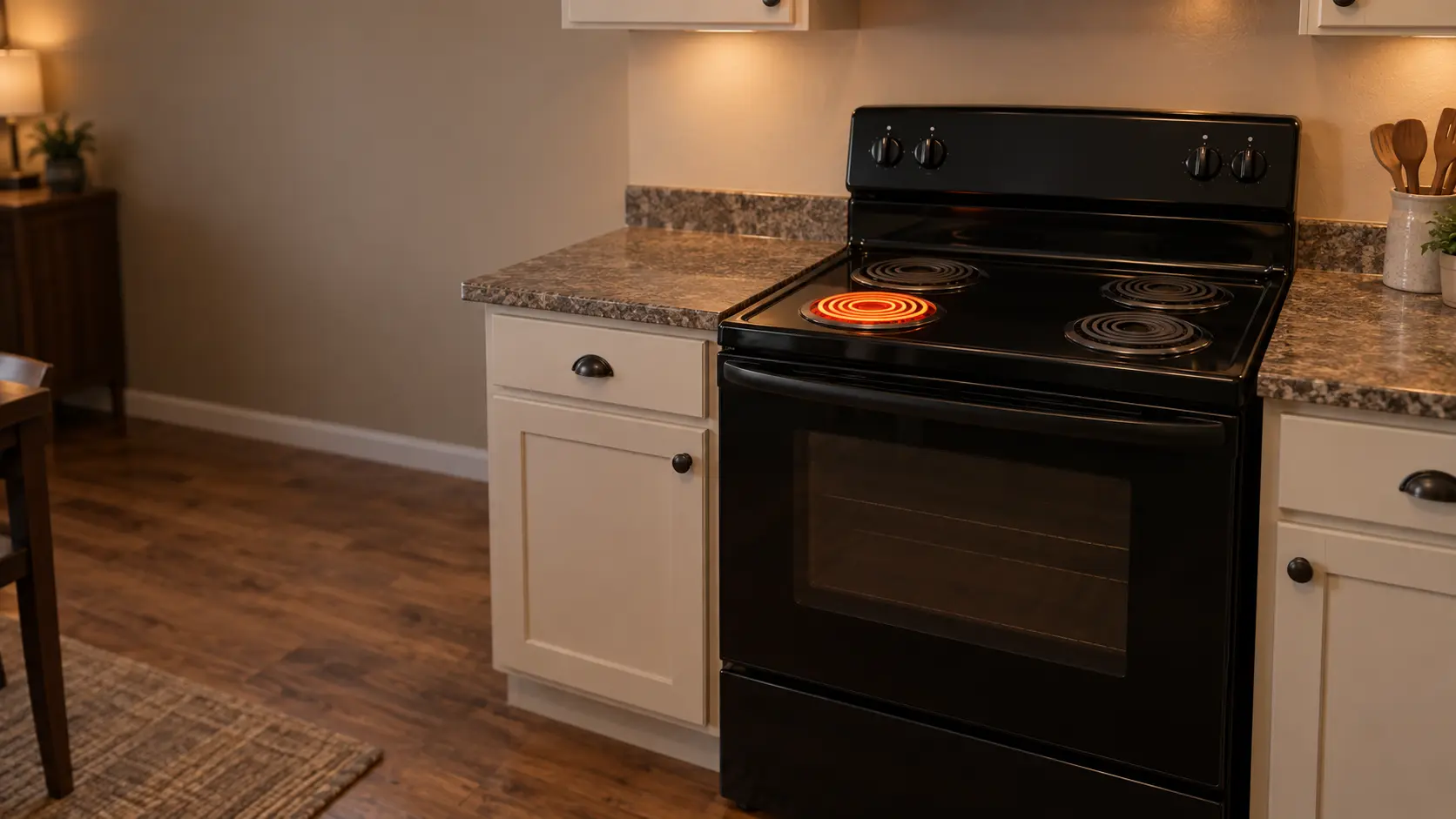
32 makes on this site; stove smoking can show up on any of them. Each mark opens that make's own page.
All 32 brandsStove Smoking,
where we come out.
9 metros, each with its own page.
All service areasTampa BayFL · 31 areas
Miami / South FloridaFL · 47 areas
New York MetroNY · 75 areas
HoustonTX · 36 areas
ChicagoIL · 50 areas
Los AngelesCA · 95 areas
San DiegoCA · 31 areas

Questions about
stove smoking.
Is it normal for a brand-new stove to smoke?
What should I keep near the stove for a grease fire?
Why does the smoke smell like burning plastic?
My stove smoked after a flood in the kitchen. What now?
Back to your everyday
Still seeing stove smoking?
Book with what you checked above — 5 answers save the technician the first part of the visit.