
Why a little every week beats a big scrub every season
Grease that sits on a warm stove hardens a little more every time a burner runs. After a week it wipes off; after three months it needs a scraper, harsh chemicals and elbow grease, and by then some of it has run under the drip bowls or into the igniter wells where it can catch fire. GE's own care page for coil stoves warns that grease built up under the drip pans may ignite.
A routine also catches problems early. The person who wipes the burners every Sunday is the one who notices a cracked cap, a knob that has started to wobble or a glass top with a new chip, while the repair is still small.
The stove cleaning routine below is split by frequency so that no single session feels like a chore. Skip a week and nothing bad happens; skip a season and the weekly pass turns into an afternoon.
The two-minute wipe after cooking
Most of the work is done here, before anything bakes on. Let the stove cool enough to touch, then:
- Wipe the stovetop and the control area with a cloth wrung out in warm water and a drop of dish soap.
- On a smooth glass top, lift anything sugary with a scraper while it is still warm, wearing an oven mitt, since sugar that cools can pit the glass.
- Dry around the burners of a gas stove so no water sits in the igniter wells.
- Hang towels and mitts somewhere other than the oven handle nearest a lit burner, and clear packaging off the top.
Source: U.S. Fire Administration — Keep anything that can catch fire away from your stove top — Keep paper towels, oven mitts, wooden utensils, food packaging, towels and curtains away from the stovetop

The weekly pass, stovetop by stovetop
Once a week, with every burner off and cool, give the top a proper clean. What that means depends on which kind of stovetop you own.
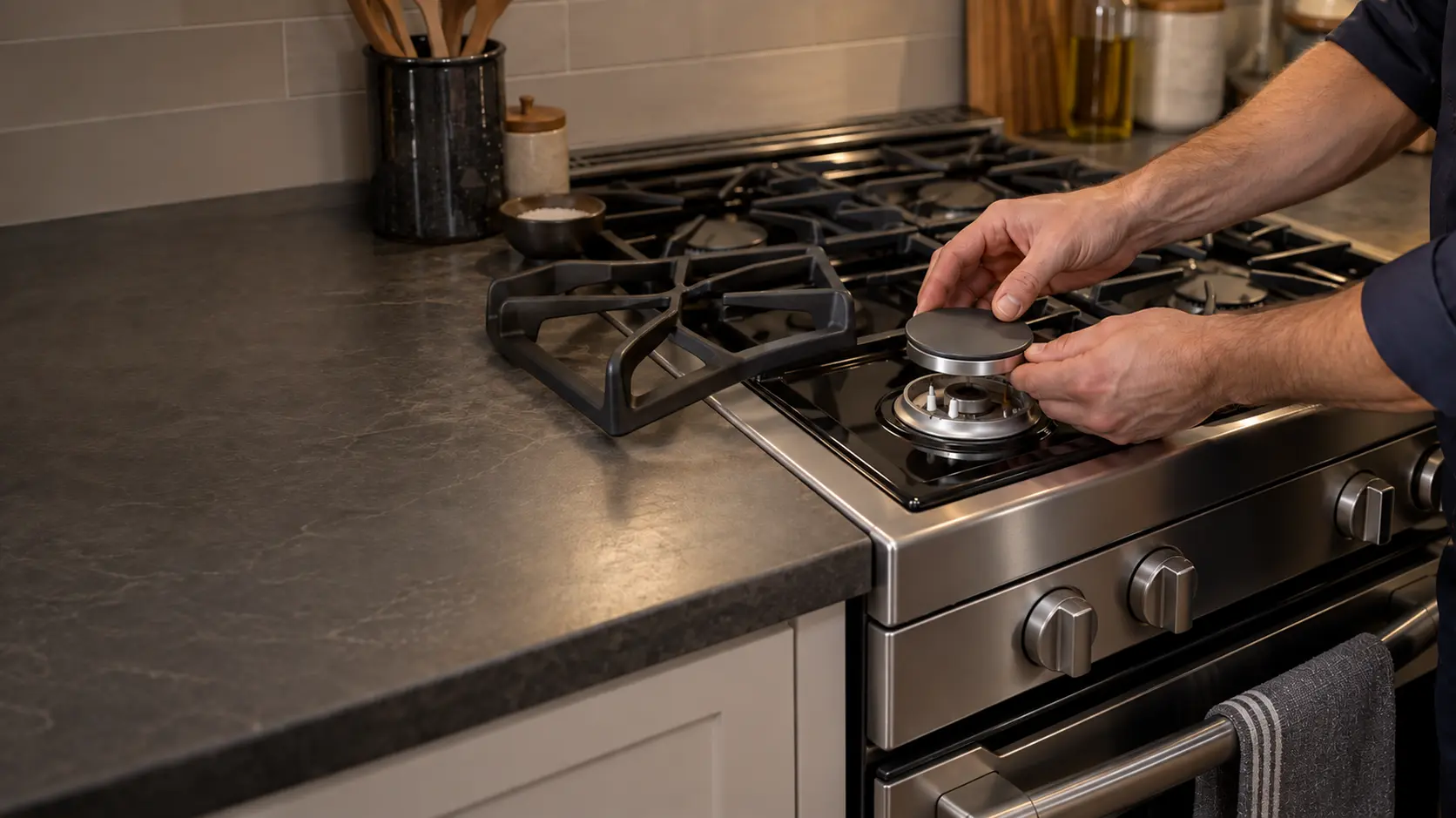
On a gas stovetop
Lift the grates and caps to the sink, wash them with hot soapy water and let them dry completely. Wipe the flat surface beneath and around each burner base, keeping the cloth damp rather than wet. Set every cap back square before lighting, and let the burners click for a moment the first time; if one takes longer than usual to catch, give it a day to dry.
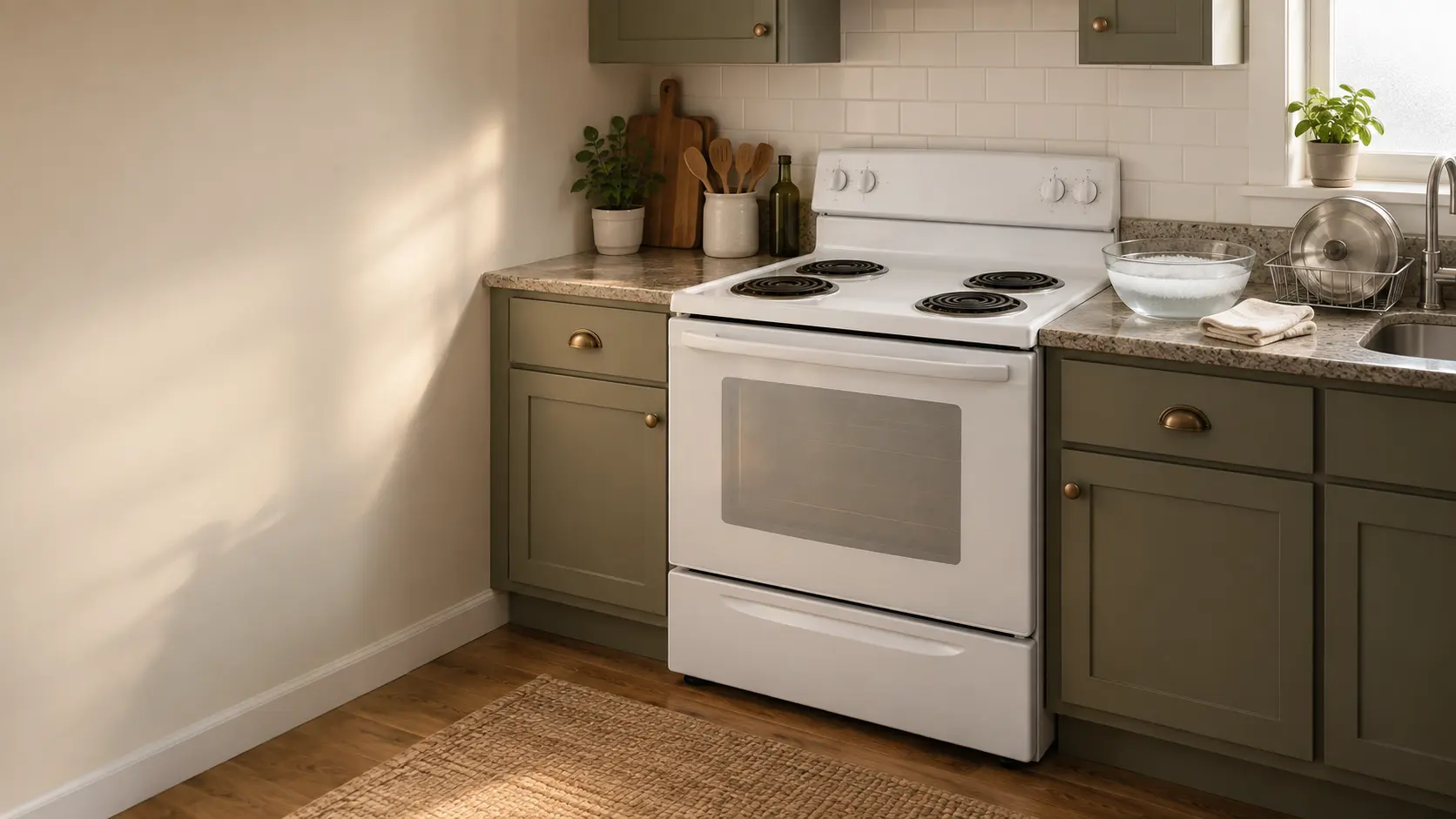
On a coil stovetop
Coil elements mostly clean themselves by burning off soil; GE's instructions are to wipe grease off a cool element and never to put one in water, the dishwasher or a self-cleaning oven. Unplug each cool element, wash the drip bowls, and for heavy soil leave the bowls overnight in a closed bag with a quarter cup of ammonia, then rinse. Wipe the well under each bowl before plugging the elements back in firmly.
On a smooth glass or induction stovetop
Use a cooktop cleaning cream and a non-scratch pad over the whole surface, then buff it dry. The weekly pass is where the faint rings and water marks come off, before they turn into something you need a razor for.
The knobs and the control panel
Pull removable knobs straight off, wash them in mild soapy water without soaking and dry them before pressing them back on with the flat side matched to the shaft. Wipe a touch panel with a damp cloth, locking it first if your model has a lock, and never spray cleaner straight onto the controls.
The oven part of the stove, once a week
Open the oven when it is cold and look at the floor. A few drips wipe up with a damp cloth now; left for a month, they smoke every time you bake. Check the inside of the door glass and the edge of the door gasket, which catches splatter and should be wiped gently rather than scrubbed, since a torn gasket lets heat out.
Racks only need attention when they start to stick; a wipe with soapy water and a little oil along the runners keeps them sliding. Keep spray cleaners away from the temperature sensor on the back wall and from any openings in the oven ceiling.
Once a month and once a season
A few places escape the weekly pass and still matter, because what gathers there burns, attracts pests or blocks airflow.
- Pull out the storage drawer or warming drawer and vacuum the floor beneath the stove.
- Run a thin brush along the gaps between the stove and the counters, where crumbs and grease drop.
- Wipe the backguard and, on a freestanding stove, the top of the control panel housing.
- Before the holidays, check that every burner lights promptly and every element heats evenly, so any repair happens before the busiest week.


