
Where is the gas shutoff valve for a stove?
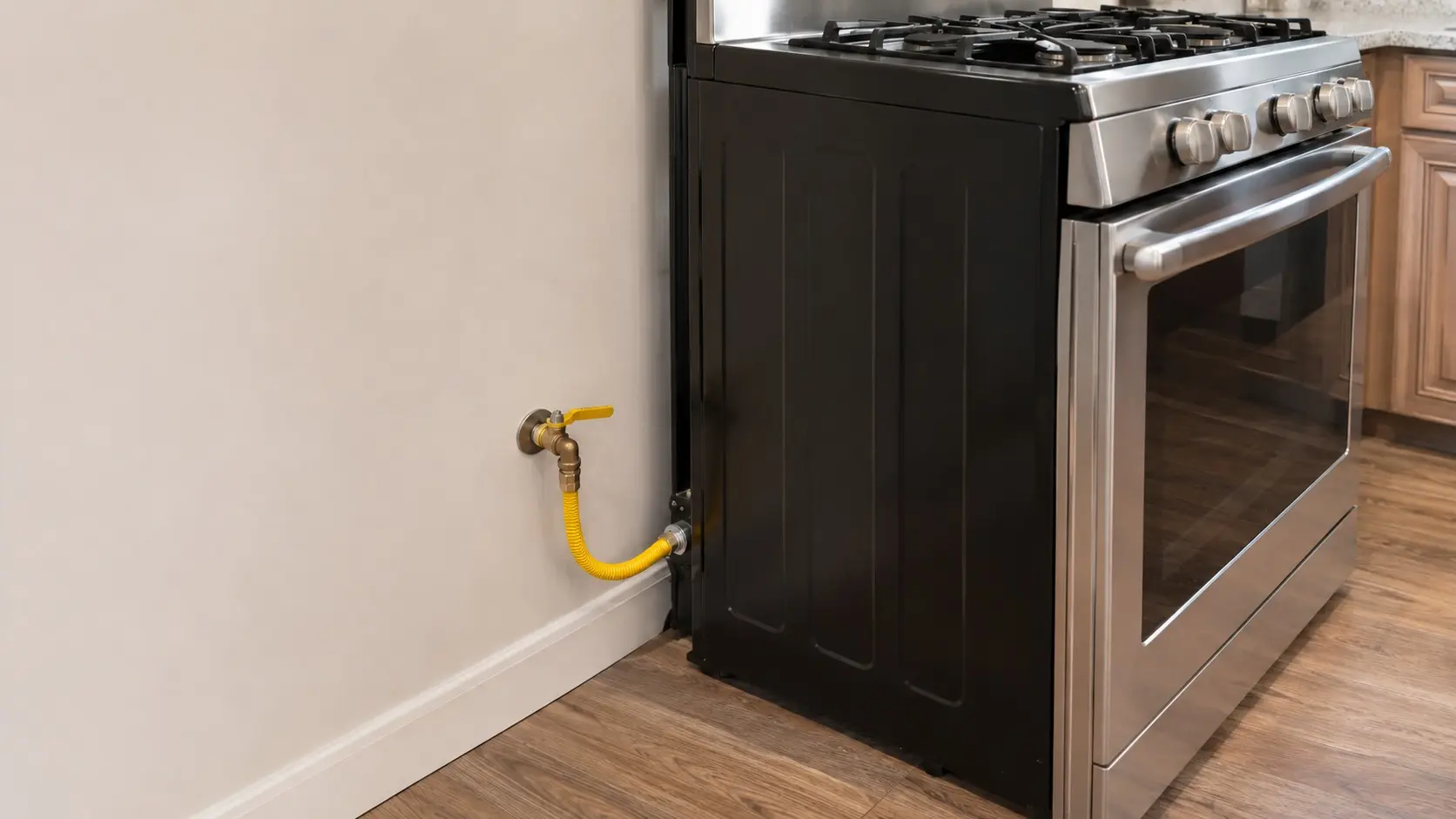
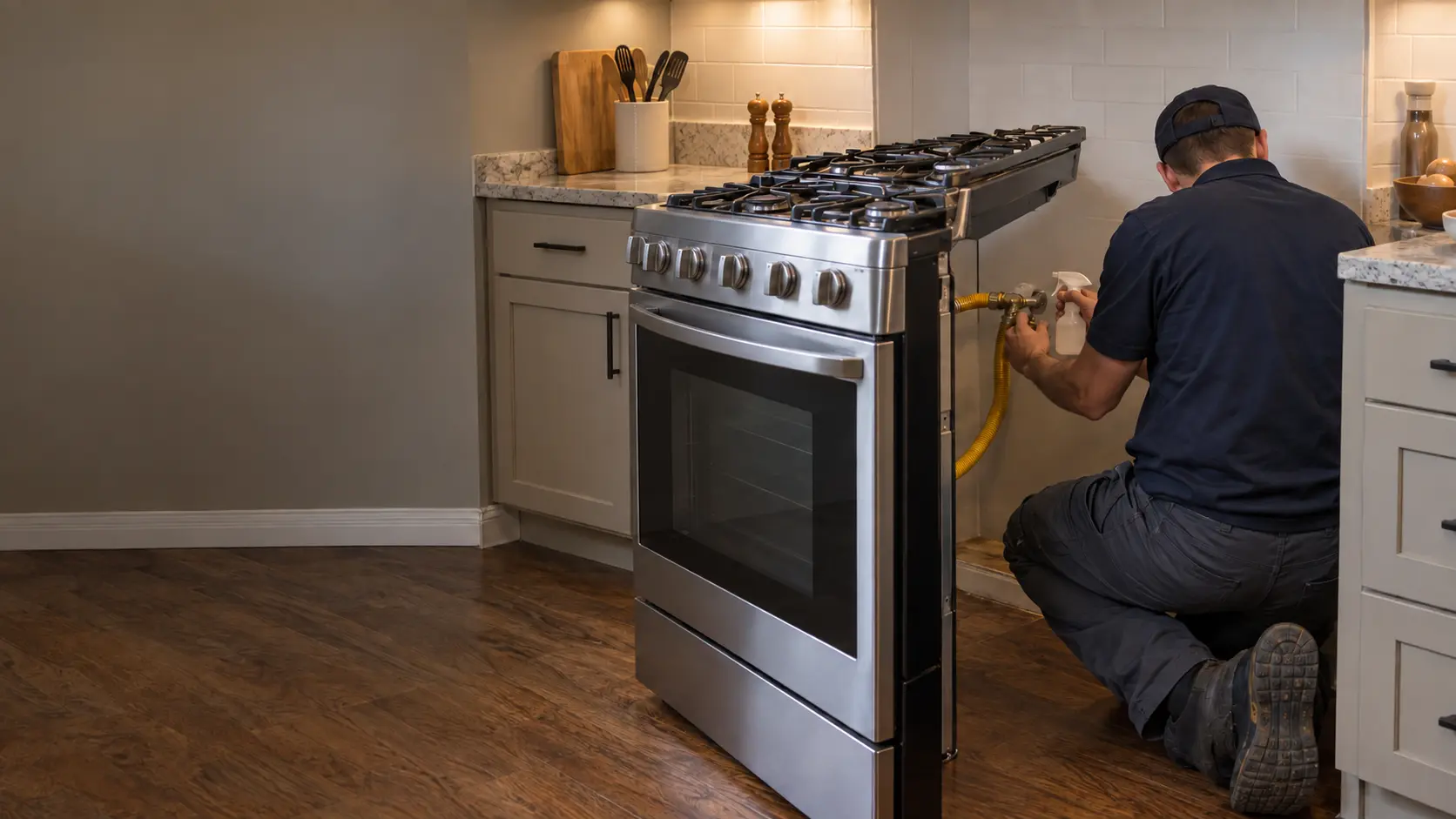
It is on the gas pipe that feeds the stove, usually in the wall or floor directly behind it, sometimes in the cabinet beside it. The pipe comes out of the wall or floor, the valve sits on it, and a flexible connector runs from the valve to the back of the stove.
The common positions
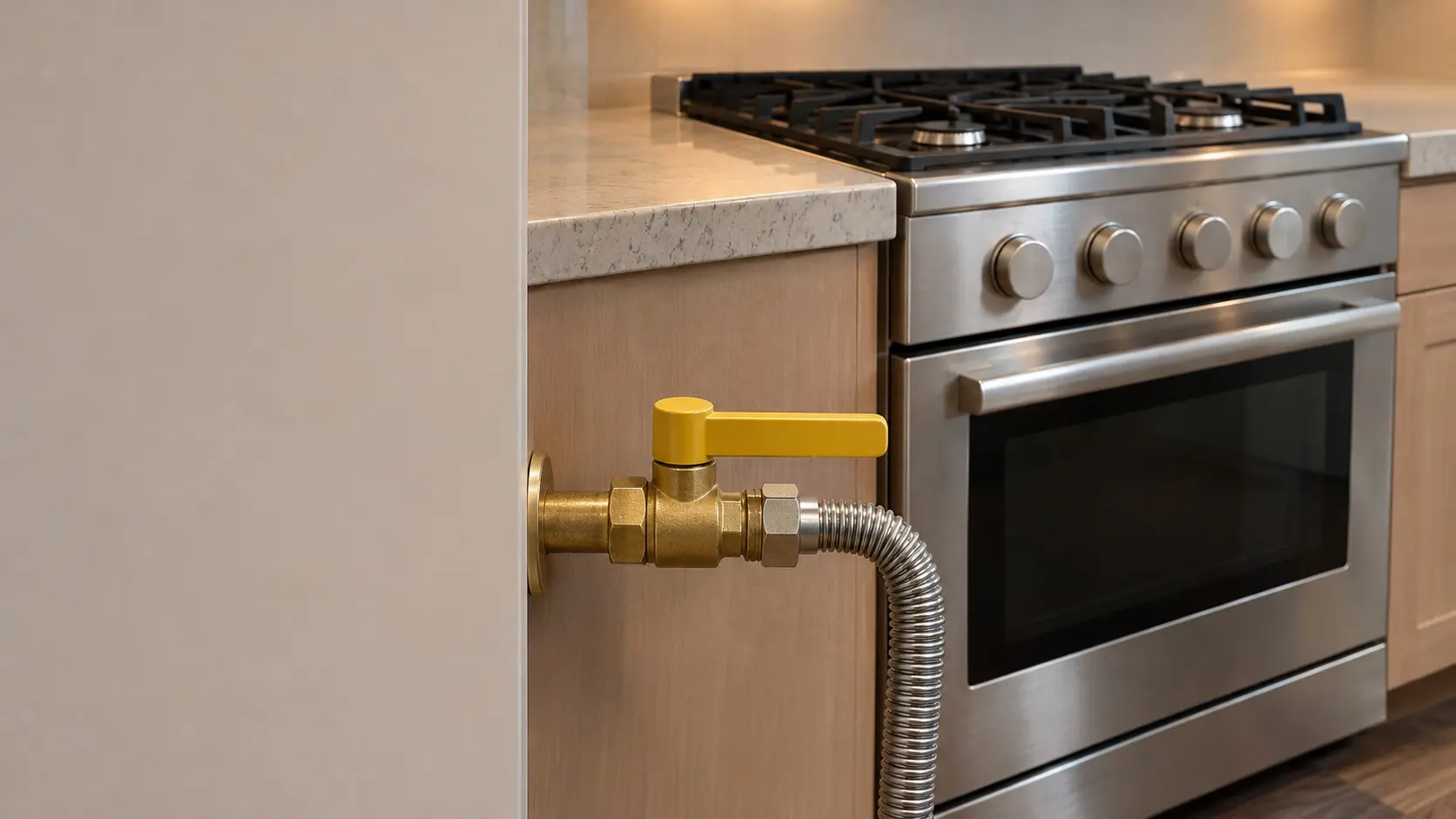
Most valves sit low on the wall close behind the stove, and some come up out of the floor under it. In a kitchen with a base cabinet next to the stove, the line may come through the cabinet's side wall, which means you can reach the valve from the cabinet instead.
How to spot it
Look for a small valve, often brass or yellow, with a flat lever handle and a pipe on both sides of it. The pipe in is rigid iron or steel, and the pipe out leads to the corrugated connector. Do not confuse it with an electrical outlet cover or a water valve. Use a flashlight and look behind the stove from the side.
Which handle position means off?
A handle that lies across the pipe, at a right angle to it, means closed; a handle that runs along the pipe means open.
- Lever in line with the pipe: gas can flow.
- Lever across the pipe, a quarter turn from the first position: gas is shut.
- Many valves have a stop that lets the lever travel only one quarter turn.
How to turn it
Turn it with your hand, not with pliers; a valve that needs a tool or force is a valve to leave alone. Do it slowly, and stop at the stop. A lever that turns freely but has no resistance at the end may be worn.
How to know it is really off
The handle position is the check: lying fully across the pipe, against its stop, means closed. Do not try to prove it by lighting burners or holding a flame near the valve. If you cannot tell, treat it as open and have a qualified installer look, and if you smell gas, leave the home and call from outside.
How do you reach the valve without pulling the stove?
Start from the side, from a drawer opening or the neighboring cabinet, and only slide the stove out a short way if you must.
Slide gently
If the valve is only reachable from behind, pull the stove forward in small movements, straight out from the wall, with a helper. The flexible connector is built to move a little, not to stretch, and it kinks when the stove is dragged sideways. Moving a stove without damage walks through the pull-out, including the anti-tip parts.
Leave the connector alone
Do not unscrew the connector or the valve. Closing the valve is something you can do; disconnecting a gas line is something a qualified gas installer does. If the stove sits tight against the wall and the connector is not visible, stop and arrange a check rather than force it. The gas and power hookup check looks at the whole line from valve to stove.
Before you move it again
Make sure the stove is off, the valve is closed and the connector is not pinched against the wall. After the stove is back in place and the valve is opened, any gas smell means leaving the home and calling the gas utility or 911 from outside, not hunting for the leak.
When does the valve need replacing?
Replace a valve that is stiff, leaks, will not close fully or shows corrosion, and do it through a qualified installer or the gas utility.
- A lever that will not turn, or turns only with a tool.
- A handle that turns past its stop or spins loose.
- A smell of gas near the valve or the connector joint (leave the home first and call from outside).
- Green or white crust, rust or flaking on the valve body.
- A valve that is missing a handle altogether.
Who does the work
Replacing a shutoff valve means opening the gas line, which is work for a qualified installer or the gas utility. It is not a home repair even where the part is cheap. The fix a gas stove yourself guide separates what an owner can do from what needs a professional.
What should every household do with this valve?
Show everyone who cooks where it is and which way off lies, and check it after any stove move or outage.
After a power cut, a gas stove with electronic ignition may click without lighting; stove checks after a power outage covers that. Closing the valve is rarely needed for a cut. Owners close it before the stove is moved or cleaned behind, and some before a long absence. If you are moving into a small kitchen, our note on the apartment size stove shows what to check behind a new one, and a diagnostic visit can look at a stove that is hard to light.


