


Induction
Stove Repair
A stove with a flat glass top that heats the pan itself through a magnetic field, run by touch keys and power boards, with an electric oven underneath.
Mon–Sat, 8am–8pm
- 4 things that fail on it
- 28 makes build it
- 6 problems it shows
Book a visit
Three short steps, about a minute.
or call (844) 415-7620
Loading appointment form…
The appointment form couldn’t load. Please try again.
Is yours
an induction?
An induction stove looks like a smooth glass electric stove until you set a pot down: the glass stays fairly cool, the pan heats almost at once, and a light or a number shows the setting. Under the glass there are copper coils, a set of power boards that drive them, sensors that watch the temperature and a fan that keeps the electronics cool, all controlled by touch keys or knobs linked to a board. Induction stove repair is mostly about that electronics, which is why a code on the display is so useful when you call. The oven below is a regular electric oven with bake and broil elements, often with a convection fan. More homes are choosing induction when an old gas or coil stove wears out, so the first problems many owners meet are the new ones: a pan that is not recognized, a zone that pauses or a fan that runs after cooking.
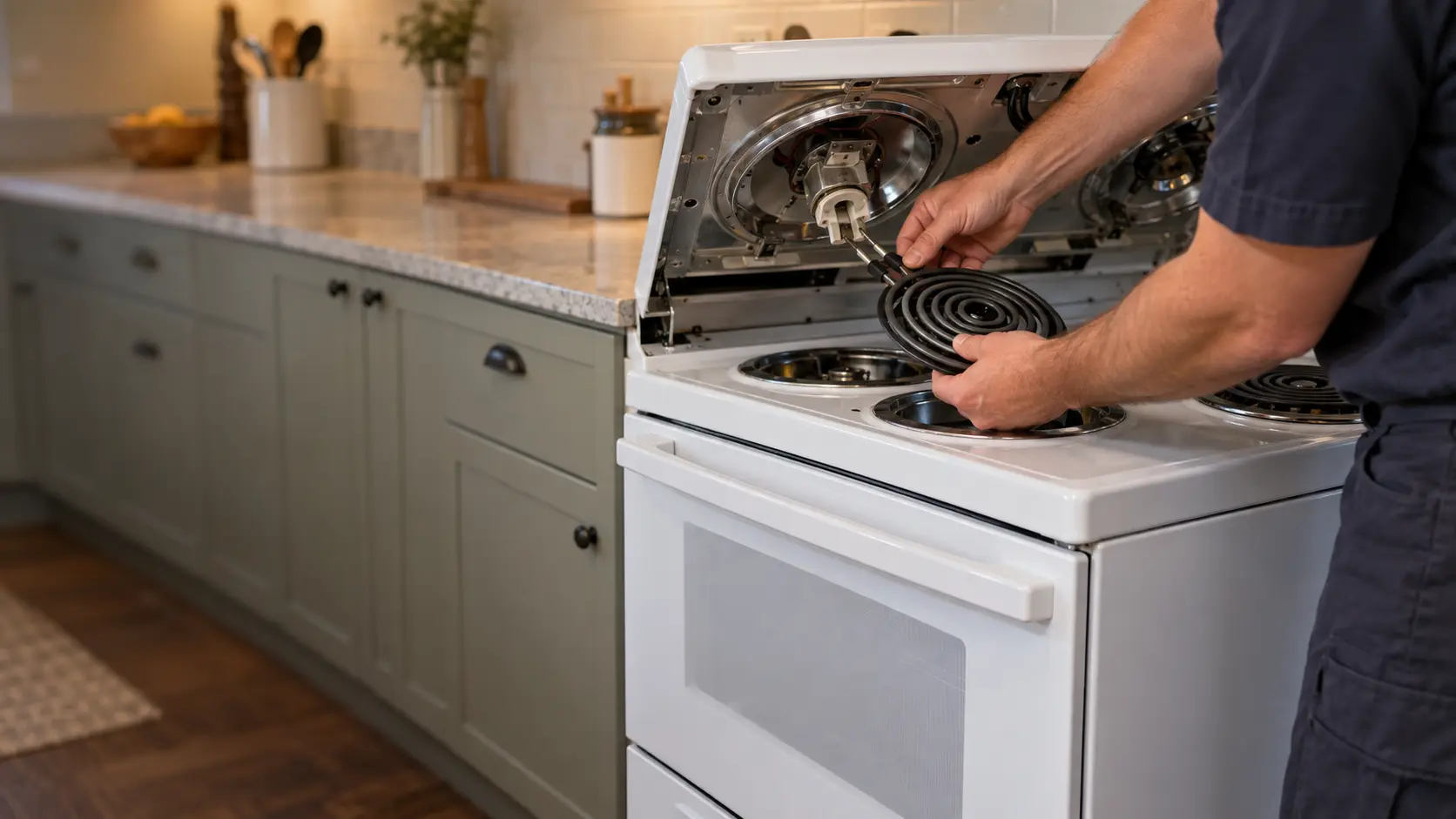 What fails on an induction stove
How to tell
The top is one sheet of glass with no visible coils, and the zones do not glow red when they are on.
A pan heats only when it is magnetic: a fridge magnet sticks to the bottom of any pan that works on it.
Touching a zone with nothing on it gives a blinking symbol or a short beep instead of heat.
A soft whir continues for a minute or two after cooking, which is the cooling fan under the glass.
Not yours?Gas stoveElectric stoveHeritage stove
What fails
on this design.
On an induction stove: power boards under the glass, touch keys that stop answering, a fan clogged with crumbs, temperature sensors and codes.
The problems it showsPower boards under the glass
A power surge, heat or a spill that reaches the electronics can take out the board that drives one or two zones, so those zones stay dead while the rest work.
Touch keys that stop answering
A film of grease, a wet cloth left on the controls or a failing key board makes the stove ignore touches, beep on its own or lock itself.
A fan clogged with crumbs
Crumbs and dust drawn in through the vents slow the fan, and the stove then lowers the power or stops a zone to protect itself.
Temperature sensors and codes
A sensor under a coil that reads wrong makes a zone cut out early and often shows a code, which points the technician at the right part.
Getting at it,
and whether to.
Write down any code on the display and the zone it belongs to before you switch the stove off, because a restart often clears it.
What repairs costOn the visit
- The glass top and its frame are lifted to reach the coils, sensors and boards, after the stove is switched off at its breaker.
- The cooling fan and the air paths are reached from under the glass or through the back panel, depending on the model.
- The oven elements and the convection fan come out from inside the oven, the same way as on any electric stove.
Repair or replace
Induction stoves are usually young, so a failed board, fan or sensor is almost always worth replacing. The cost rises when a power board and the glass fail together, and a model whose boards are no longer supplied can make a new stove the practical answer. Because the pans and the outlet are already in place, going from one induction stove to another is an easy swap.
Book a visit for an induction stoveThe problems
it shows.
On an induction stove, most often stovetop not heating.
All problems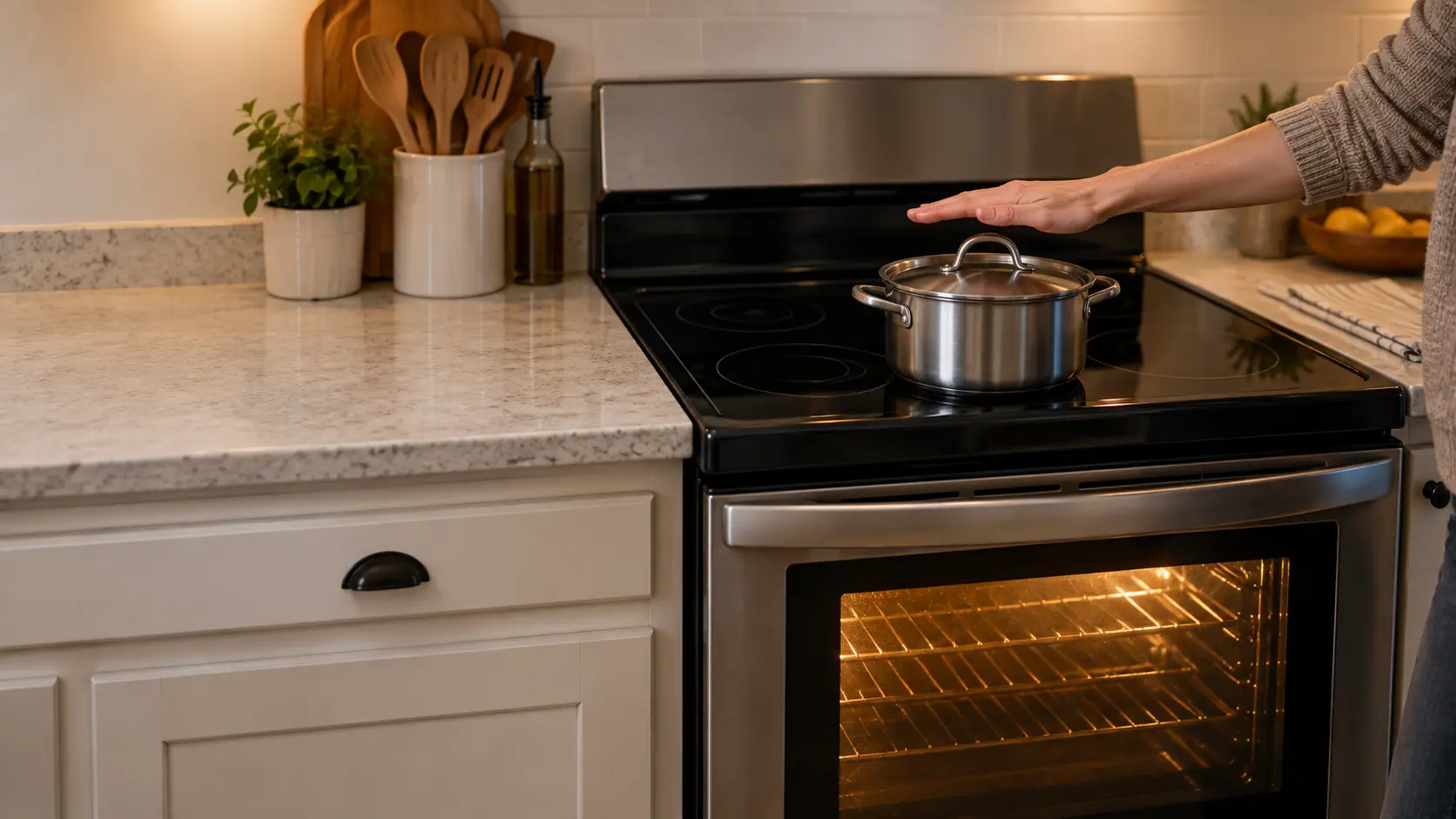


Who builds
an induction.
28 of the makes on this site build an induction stove. Each mark opens that make's own page.
All 32 brandsInduction stove repair,
where we come out.
9 metros, each with its own page.
All service areasTampa BayFL · 31 areas
Miami / South FloridaFL · 47 areas
New York MetroNY · 75 areas
HoustonTX · 36 areas
ChicagoIL · 50 areas
Los AngelesCA · 95 areas
San DiegoCA · 31 areas

Questions about
induction stoves.
My old pots do not work on the new induction stove. Is the stove broken?
Is an induction stove safer around small children?
The stove pauses a zone during a long boil and then comes back. Why?
Can I use my induction stove if a small crack appears in the glass?
Back to your everyday
Is it an induction stove?
Say so when you book — it changes what the technician brings and how the visit is planned.