
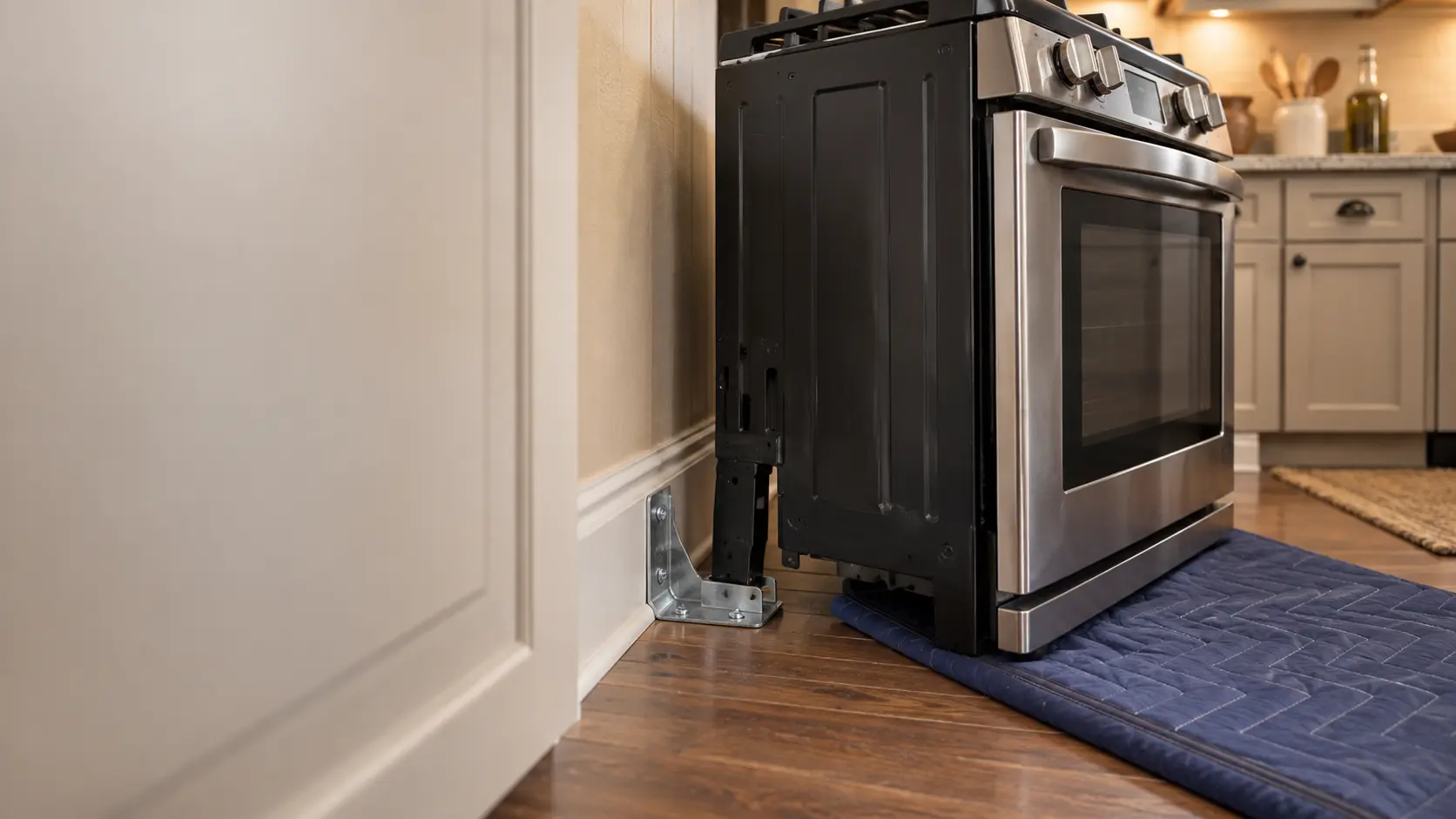

Moving, hooking up and bringing a stove back
Installation and setup
guides.
Moving a stove without scratching the floor or kinking a line, what a safe cord and outlet look like behind an electric stove, and what to do before using a stove that sat through a flood or a storm.
Mon–Sat, 8am–8pm
- Three guides
- Read before you book
- Says where to stop
Book a visit
Three short steps, about a minute.
or call (844) 415-7620
Loading appointment form…
The appointment form couldn’t load. Please try again.
Installation and setup,
guide by guide.
A stove stays put for years, and most of what can go wrong with how it is set up is hidden behind it: the gas connector and shutoff valve, the heavy cord and its outlet, the anti-tip bracket at floor level. These guides are for the occasions when that hidden part comes into play, which are usually the days a stove is pulled out, a household moves, or water or a storm has been through the kitchen.
All 18 guides

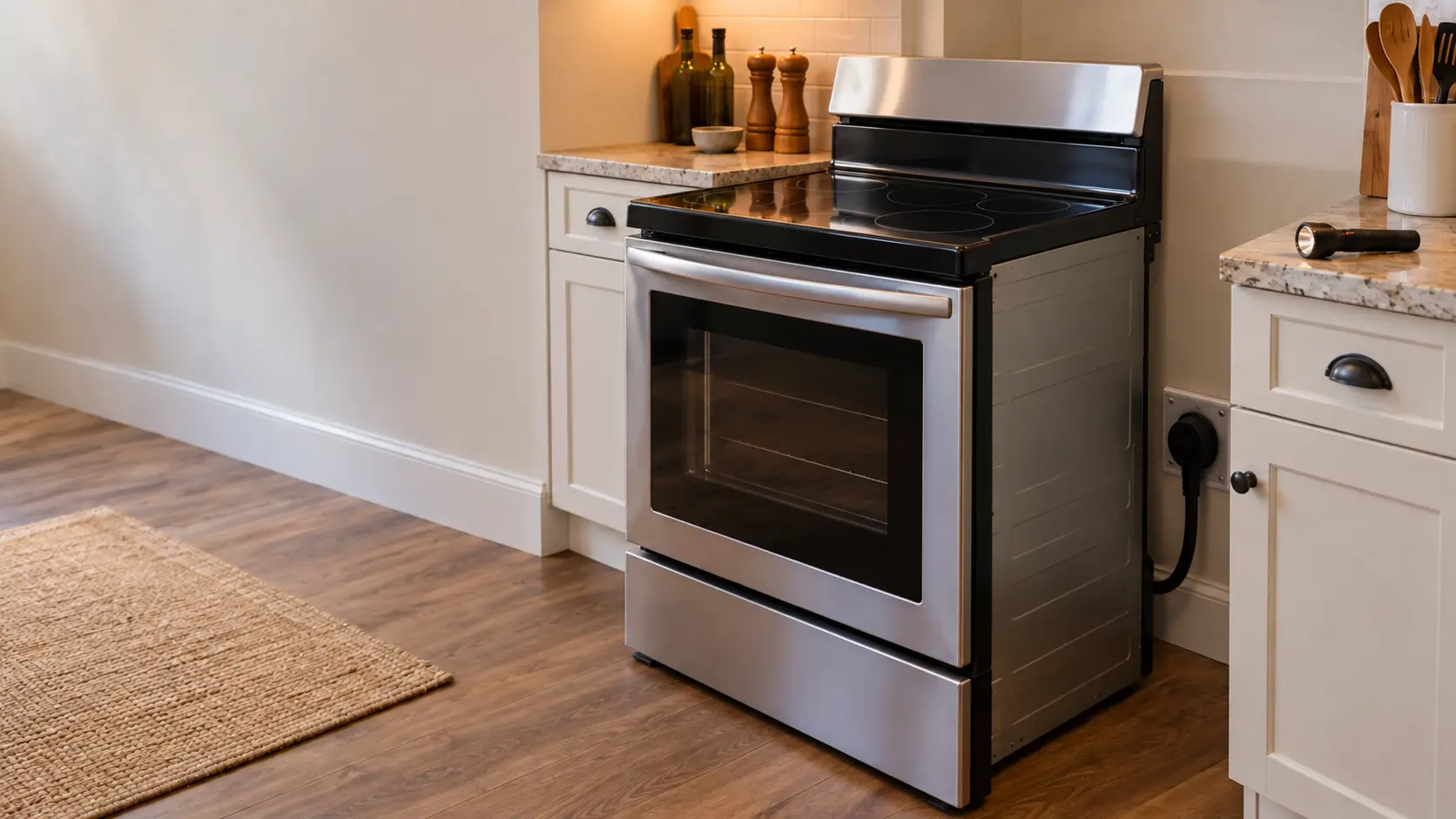
Moving, hooking up and bringing a stove back.
Moving a stove is mostly about the floor, the oven door and the line at the back, and about pushing it home onto its bracket afterwards. A stove that has stood in floodwater raises a harder question, because gas valves and electrical safety parts that were under water are replaced rather than dried out. And the cord and outlet behind an electric or gas stove can be judged by eye, with the breaker off, long before anything fails.
None of these guides asks you to loosen a gas fitting, open the stove's terminal cover or work inside the wall. They explain what should be there, what you can safely look at, and when the job belongs to the gas utility, an electrician or our technician.
Not sure where to start?The short answerMoving a Stove Without Hurting the Floor, the Gas Line or the Stove
Moving a stove safely means emptying and lightening it, protecting the floor, pulling it straight out by the body rather than the oven door handle or the stovetop, and knowing where the gas connector or power cord stops.
The short answerA Stove After a Flood or Storm: Before You Cook on It Again
A stove after a flood stays off if water reached its controls, wiring or gas valves: CPSC says submerged gas control valves and electrical safety devices must be replaced and the rest checked by a technician.
The short answerBehind the Stove: What the Cord and Outlet Should Look Like
A gas stove plugs into an ordinary 120-volt grounded outlet; an electric or induction stove uses a heavy three- or four-wire stove cord and outlet on a 240-volt circuit, or is wired to a junction box.
When reading
is not enough.
If the checks in these guides did not settle it, the visit picks up from there, stop by stop.
What repairs cost- 01The stove, tried the way you use it
- 02A number before the work
- 03Common stove parts already on board
- 04Put back, then cooked on
The problems
these answer.
Each has a page of its own, with the causes in the order worth checking.
All 17 problems


Questions about
installation and setup.
Can I disconnect my own gas stove to move it?
My stove was in a flooded kitchen but looks fine. Can I switch it back on?
How do I know whether the outlet behind my stove is safe?
The other
sections.
Split by what you are trying to find out rather than by which part of the appliance it concerns.
All guides


Back to your everyday
Let’s get your stove working again.
Three short steps online, or one call. Tell us what you are seeing and pick a window that works.