
What sits behind each knob
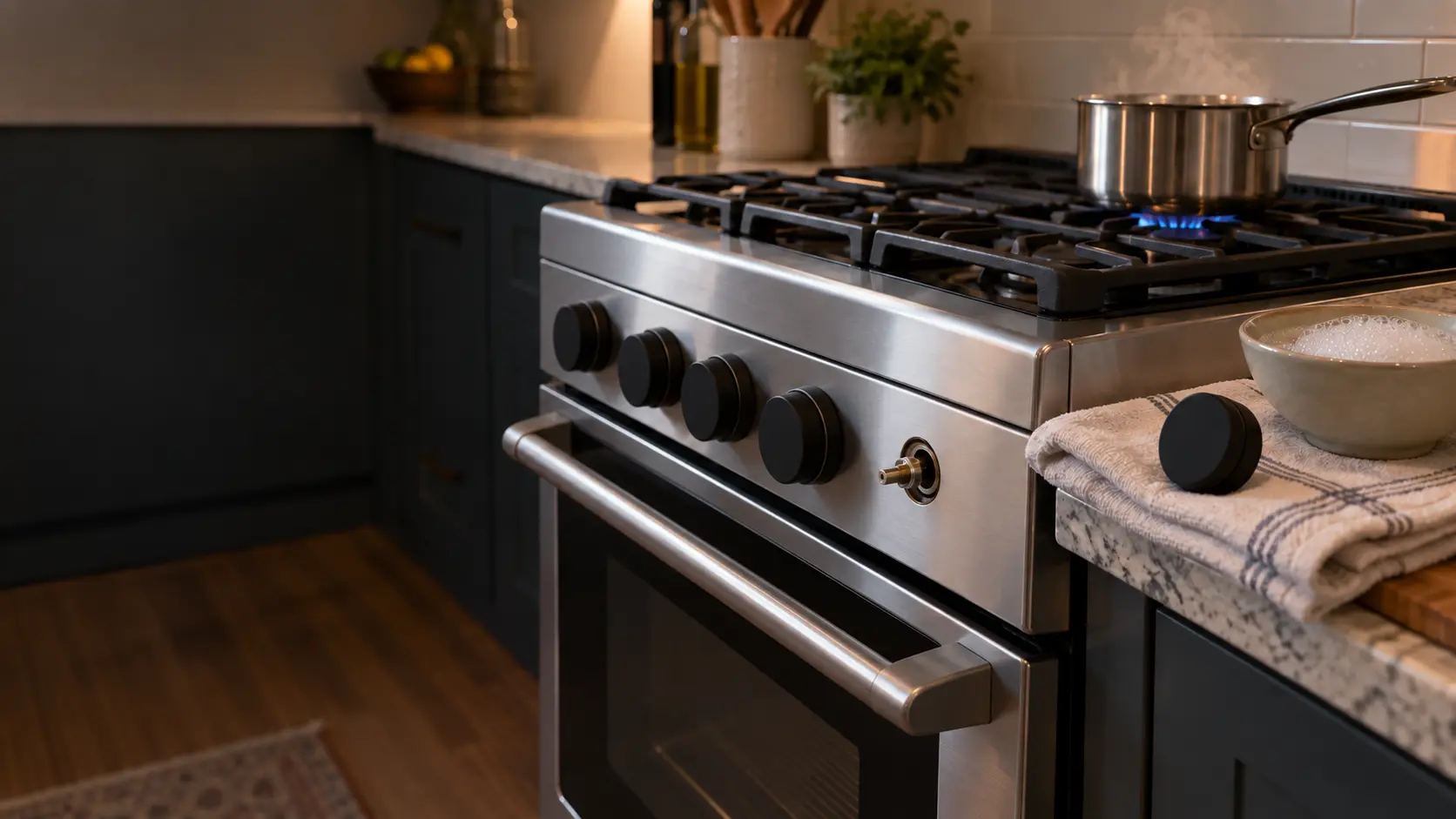
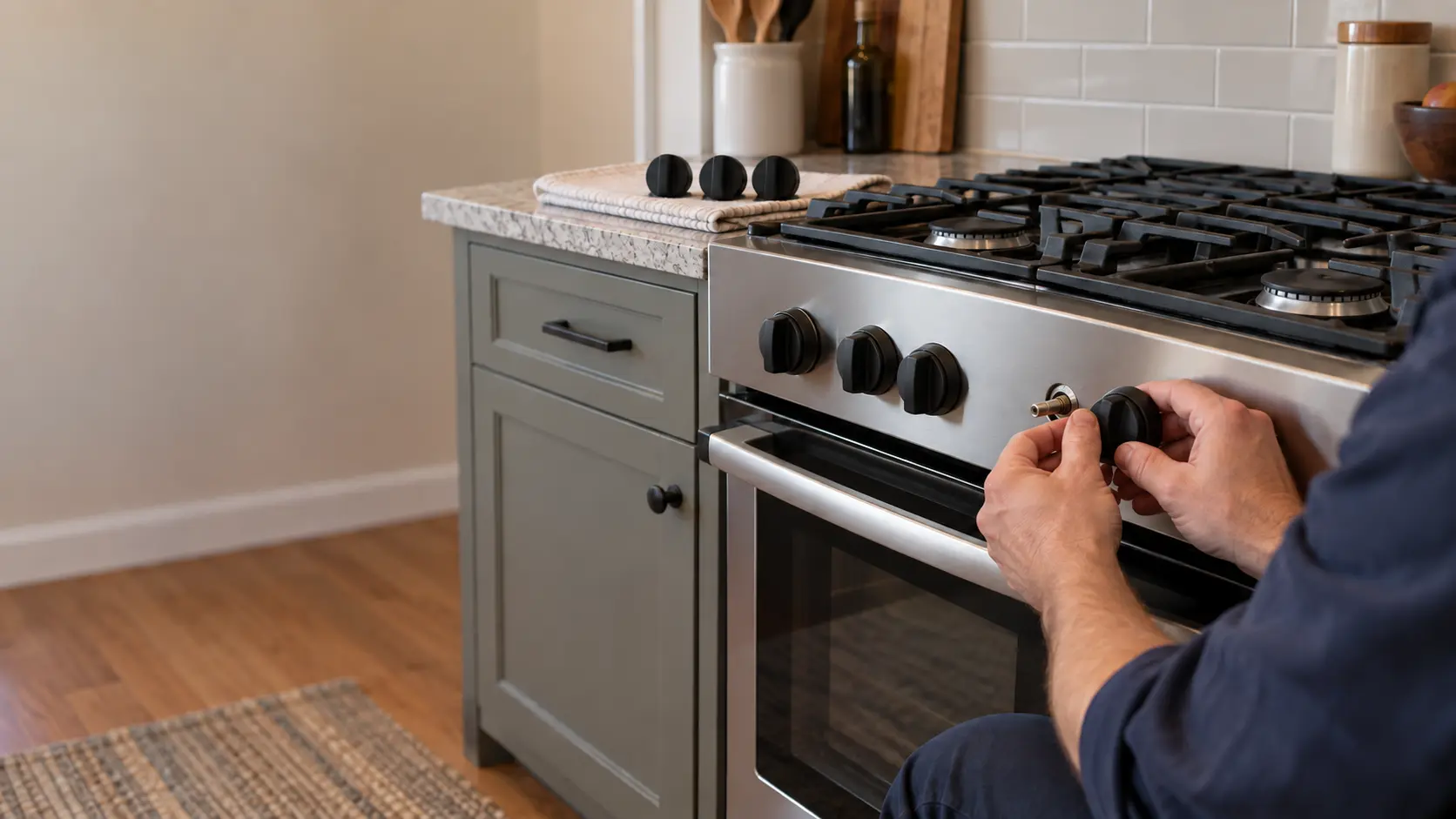
Pull a knob off and you see a short metal shaft, usually with one flat side so the knob can only go on one way. That flat is what tells the valve or switch behind the panel where off is. What the shaft belongs to depends on the stove.
On a gas stove: a valve and a spark switch
The shaft turns a gas valve that meters the flame. Most knobs must be pushed in before they turn, a deliberate safety step. A small switch on the same shaft tells the spark module to click when the knob is in the light position, which is why a damp or cracked switch can make burners click when they should not.
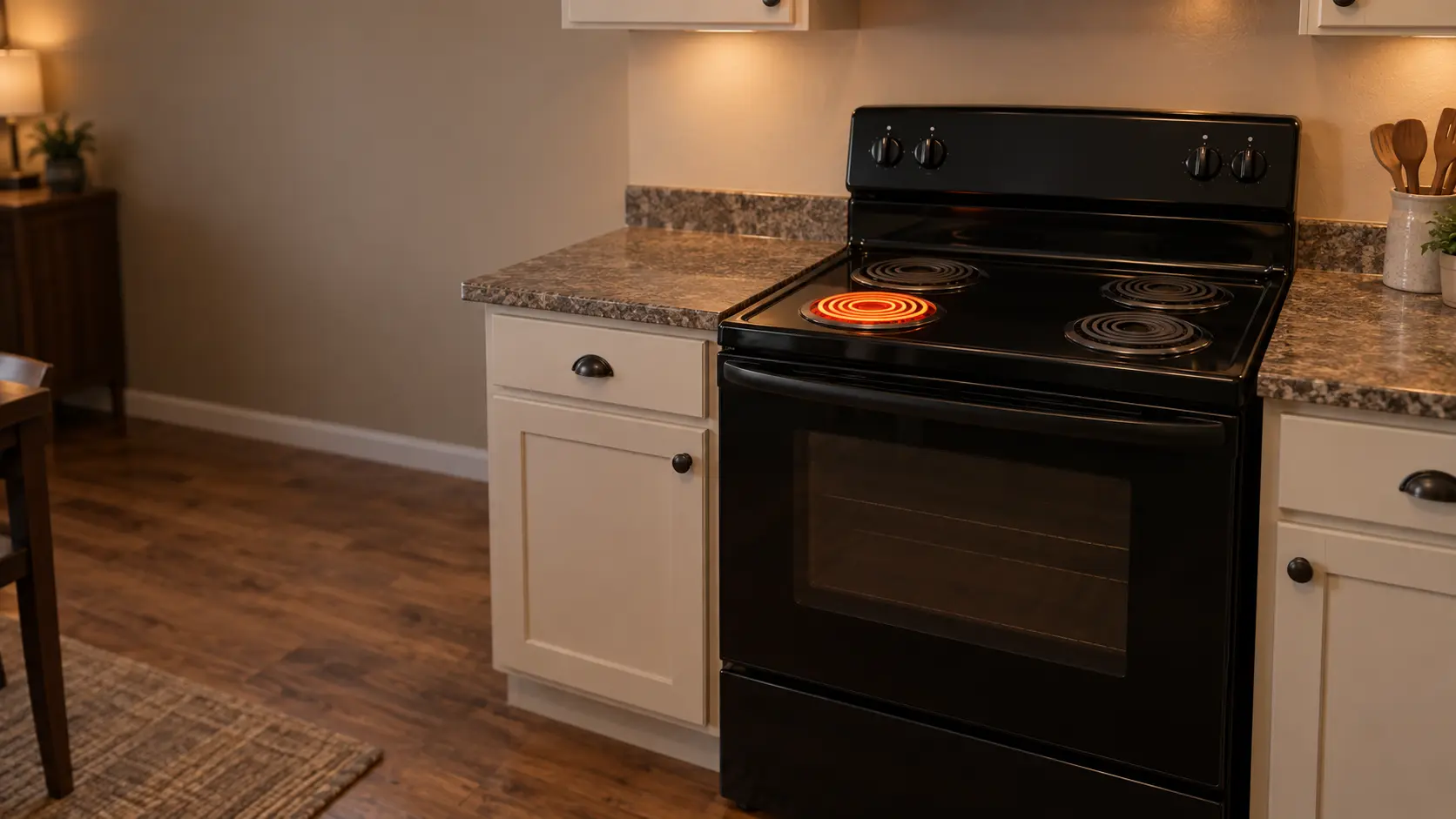
On a coil or glass electric stove: an infinite switch
Here the shaft turns an infinite switch that cycles the element on and off; the higher the setting, the longer the on periods. It carries full 240-volt current, so a switch that crackles, smells hot or leaves an element stuck on high is a repair, not a cleaning job.
On newer stoves: an encoder feeding a board
Some electric and induction stoves with knobs use an electronic encoder that simply reports the knob position to a control board. The knob feels the same, but a problem can come from the encoder, the board or the ribbon between them.
How knobs get damaged in ordinary use
Most broken knobs were hurt by one of a handful of habits. GE's care advice lists two of them directly: keep oversized pots and pans away from the knobs, and never set a hot pan on or near them.
- A wide pot on a front burner that bakes the knob beside it until the plastic softens or cracks.
- Spray cleaner aimed at the control area, which runs down the shaft into the valve or switch.
- Knobs soaked in the sink, which lets water sit inside the hub and swell or loosen the metal clip.
- Pulling a knob off at an angle, which splits the hub or bends the shaft.
- Children or pets using a front knob as a handhold, especially on stoves with controls at the front.
Source: GE Appliances — Care and cleaning of removable knobs — Avoid excessively large pots and pans near the knobs and keep hot pans off them; pull knobs straight off, wash in mild soap and water without soaking, line the flat side up with the shaft; leave the cardboard splash guards in place

Taking knobs off and cleaning them properly
Make sure every burner and element is off and the stovetop is cool. Grip the knob close to the panel and pull it straight toward you; if it is stiff, rock it gently up and down rather than twisting. Photograph the row first if the knobs are not marked, since oven and burner knobs can look alike and GE warns not to interchange the oven knobs on a double oven stove.
Wash each knob in warm water with mild detergent and a soft cloth, without leaving it to soak, and dry it inside and out. Wipe the panel around the shafts with a damp, not wet, cloth. Some stoves have a cardboard or foil ring behind the knobs; leave it where it is, because it keeps spills out of the parts below.
Source: GE Appliances — Care and cleaning of removable knobs — Avoid excessively large pots and pans near the knobs and keep hot pans off them; pull knobs straight off, wash in mild soap and water without soaking, line the flat side up with the shaft; leave the cardboard splash guards in place; GE Appliances — Cleaning the knobs — Dry knobs well after washing, and do not interchange the oven knobs on double oven models
Loose, stiff or spinning knobs and what each points to
A knob that feels wrong is telling you something about either the knob or the part behind it. Sort it by what you feel:
- Spins without turning anything: the hub inside the knob is cracked or its spring clip is gone; a new knob usually cures it.
- Falls off easily: a worn hub or a missing clip, and occasionally a shaft rounded off by years of forcing.
- Stiff to turn on a gas stove: the valve itself is getting dry or dirty; do not spray lubricant into it, have it serviced.
- Turns but the burner or element does nothing: the knob may be fine and the switch, valve or igniter behind it the problem.
- Wobbles and crackles on an electric stove: a switch terminal may be loose or burned, which calls for the breaker and a technician.
Replacing a knob the right way
Order replacements by the stove's model number, not by appearance. Knobs that look identical can have a different shaft shape, a different depth or a different off position, and a universal knob can end up with its markings pointing to high when the burner is off. That mismatch is a safety issue, not a cosmetic one.
Press the new knob on with its flat lined up to the shaft until it seats fully, then turn it through its range with the burner or element off and back to off. Make sure the push-to-turn action still works on a gas stove before lighting anything.